

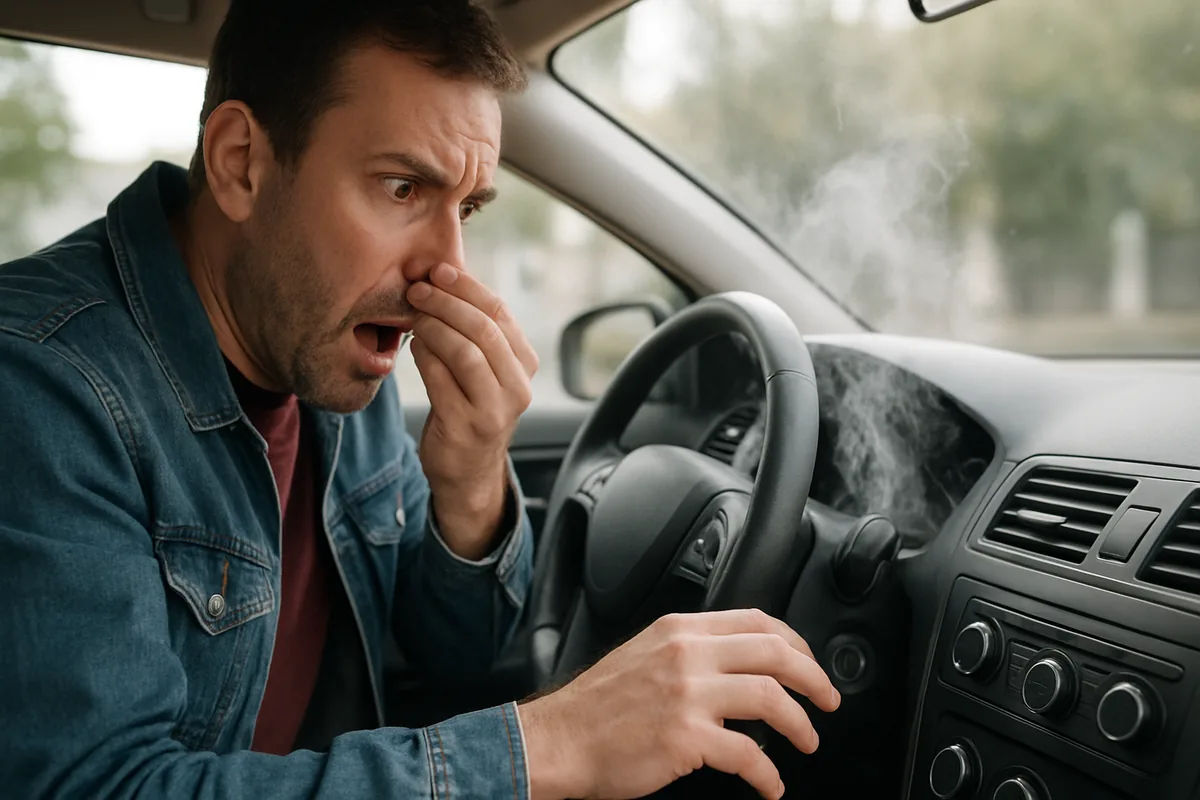
At a Glance
| Most urgent cause | An electrical short overheating wiring insulation |
| Safe to drive? | No, if the smell is sharp and electrical or there is smoke |
| From the vents? | Usually the blower motor or HVAC wiring overheating |
| From under the hood? | Often plastic or debris melted onto a hot engine or exhaust part |
| Faint, in a new car? | Often harmless off-gassing that fades in days |
| The warning sign | A blown fuse, a dead accessory, or any smoke |
A burning plastic smell is one of the few car smells that can be an emergency rather than an annoyance, because burning plastic is often burning electrical insulation. This guide splits the smell two ways: first by how urgent it is, then by where it is coming from, so you can tell a fire risk from a harmless melted bag in seconds.
Mechanisms below are general. Costs vary by vehicle and are ranges to confirm with a shop; if you ever suspect an active fire, treat it as an emergency rather than a diagnosis.
Table of Contents
Is a burning plastic smell dangerous?
A burning plastic smell can be dangerous, and the deciding factor is whether it is electrical. A sharp, acrid burning-plastic smell from melting wiring insulation signals an electrical short that can start a fire, and it often comes with a blown fuse, a dead accessory, or faint smoke. A milder smell from debris melting on a hot exhaust is usually harmless once the debris is removed. When in doubt, treat it as the electrical case until you have ruled that out.
Caution: if you smell burning plastic and see smoke, or the smell is coming from the dashboard, vents, or under the hood and growing, pull over as soon as it is safe, turn the car off, and get everyone out. The US Fire Administration advises pulling over, switching off the engine, getting everyone clear, and not opening the hood if you suspect a fire under it, because opening it feeds the fire air. Vehicle fires are not rare: the National Fire Protection Association recorded roughly 200,000 highway vehicle fires in a recent year. If you see flames or growing smoke, get well clear and call 911.
Where is the smell coming from? Start here
Start by locating the smell, because where it comes from tells you how worried to be. A burning-plastic smell has four common sources, and they range from stop-the-car urgent to harmless. Match what you notice to the table, then read the matching section.
| Where you smell it | Most likely cause | Stop or investigate? |
|---|---|---|
| From the vents, worse with the fan on | Blower motor, its resistor, or HVAC wiring overheating, or debris in the HVAC box | Stop using the fan; have it inspected |
| From under the hood | Plastic or debris melted onto a hot exhaust or engine part, or an overheating accessory | Let it cool, then investigate |
| From the dash or a switch, or with a blown fuse | An electrical short overheating wiring insulation | Stop now, fire risk |
| Everywhere, or with smoke | An active electrical fault | Pull over, get out, call for help |
| Faint, in a new car or after a repair | Harmless off-gassing from coatings heating up | Usually fine if it fades |
Burning plastic is one of several burning smells, and they point at different things. A hot-rubber smell is covered in our guide to a car that smells like burning rubber, and an oily burning smell in how to get rid of a burning oil smell. If the smell is more sour than burnt, our guide to why a car smells like vinegar covers that instead.
An electrical short or overheating wiring (the urgent one)
An electrical short is the burning-plastic smell you cannot ignore, because it is the fire-risk cause. A short circuit or an overloaded circuit runs too much current through a wire, and the wire’s plastic insulation overheats and melts, giving off a sharp, acrid burning-plastic smell. It often comes with a warning sign: a blown fuse, an accessory that suddenly stops working, flickering lights, or faint smoke from the dash. A fuse that keeps blowing is a classic sign of an electrical fault.
Caution: a burning electrical smell is a potential fire in progress, so treat it as urgent. Pull over, turn the car off, and get out if the smell is strong or you see smoke. Do not pull panels off or start disconnecting wires to hunt for the source, because if it is electrical a spark can make it worse, and if it is smoldering, adding air can too. This is a job for a professional, or for emergency services if there is any smoke or flame. Aftermarket wiring, from a stereo, dash cam, or accessory installed incorrectly, is a common cause, and reversed jumper-cable connections can also scorch wiring, which our guide to jump-starting a car safely helps you avoid.
An overheating blower motor or HVAC fault
A burning-plastic smell that comes from the vents and gets worse when you turn the fan up usually points to the heating and cooling system. The blower motor, its resistor, or the wiring feeding it can overheat, and debris such as a pile of leaves or a small melted object caught in the HVAC box can smell similar when the fan pushes warm air over it. The link to the fan is the giveaway: if the smell tracks the fan speed, the blower circuit is the place to look.
A blower motor overheating enough to smell is an electrical concern, not just a comfort one, so the right move is to stop running the fan and have it inspected rather than turning it up to push the smell out. If your climate system is also not cooling or heating properly, our guide to a car AC that is not blowing cold covers the related faults in that system.
Plastic or debris melted on a hot engine part
The most common harmless cause of a burning-plastic smell is something plastic melting on a hot part of the engine or exhaust. A plastic bag, food packaging, or road debris can get sucked up and land on the hot exhaust manifold or engine, where it melts and smokes. It smells strong and alarming, but it clears once the debris is removed, and it is not an electrical fire. A plastic-coated drive belt slipping can produce a similar smell too.
Caution: let the engine cool completely before you look for melted debris, because the exhaust and engine run extremely hot and cause serious burns. Never reach toward a running engine or a hot exhaust. Once it is cool, you can look for and peel away any melted plastic. If you cannot find an obvious cause, or the smell returns after the debris is gone, treat it as a possible electrical problem and have it checked.
Is it just a new car or a new part?
A faint burning-plastic or chemical smell in a new car, or right after a repair, is often harmless off-gassing rather than a fault. New protective coatings, plastics, and components heat up for the first time and release a mild smell that fades over a few days of driving. This is the one version of the smell that usually needs no action at all, only a little patience.
The guardrail matters, though: this only applies when the smell is faint and fading. A burning-plastic smell that is strong, persistent, or getting worse is not off-gassing, and it should be investigated like any other burning smell. If a new part was just fitted and the smell is strong, it is worth having the installer check their work rather than assuming it will fade.
What should I do right now?
What you do depends entirely on whether the smell is electrical, so sort that first. Follow these steps in order.
- If the smell is sharp and electrical, or you see smoke, pull over and turn the car off. Signal, move safely off the road, stop, and switch off the ignition. Get everyone out if the smell is strong or smoke is present, and call 911 for any flames or growing smoke.
- Do not go hunting under the dash. Do not pull panels or disconnect wiring to find an electrical source, because a spark can ignite it and opening things up can feed a smolder. Leave that to a professional.
- If it is faint and you suspect debris, let the engine cool first. Once cool, open the hood and look for melted plastic on the exhaust or engine, and remove what you find.
- Note the clues. Did a fuse blow, did an accessory die, is the smell tied to the fan, is there smoke. These tell a shop whether it is electrical, HVAC, or debris.
- Get electrical smells diagnosed, do not drive on them. Never keep driving an electrical burning smell to see if it clears. Have it professionally diagnosed, and keep a working fire extinguisher rated for electrical fires in the car.
Frequently asked questions
Can I keep driving if my car smells like burning plastic?
Not if the smell is sharp and electrical or there is smoke, because that is a fire risk, so stop and turn the car off. A faint smell that seems to come from debris on a hot exhaust is lower risk, but still worth checking once the engine cools. When unsure, treat it as electrical and stop.
Why does my car smell like burning plastic when the heat or AC is on?
A burning-plastic smell tied to the fan usually points to the blower motor, its resistor, or wiring overheating, or debris caught in the HVAC box. Because it is an electrical concern, have it inspected rather than running the fan repeatedly to clear it. Turning the fan up can make an overheating motor worse.
Is a burning plastic smell an electrical fire?
It can be the early warning of one, because melting wiring insulation smells like burning plastic before a fire actually starts. Treat a sharp electrical smell, a blown or repeatedly blowing fuse, or any smoke as urgent, and stop driving. Catching it at the smell stage is what prevents the fire.
Why does my new car smell like burning plastic?
A faint burning-plastic or chemical smell in a new car is often harmless off-gassing from coatings and components heating up for the first time, and it usually fades within a few days. A strong or lasting smell is not normal off-gassing and should be investigated like any other burning smell.
What melts and causes a burning plastic smell under the hood?
A plastic bag, packaging, or road debris that lands on the hot exhaust or engine is the usual culprit, melting and smoking until removed. A slipping plastic-coated belt can smell similar. Let the engine cool, then look for and clear any melted plastic, and have it checked if the smell returns.
What to do now
Sort the smell by urgency first. If it is sharp and electrical, or there is any smoke, stop as soon as it is safe, turn the car off, get everyone out, and call for help, because burning insulation is an early warning of a fire and must never be driven on. If the smell comes from the vents, the blower circuit is the suspect. If it is from under the hood and faint, let the engine cool and look for melted debris. And a faint smell in a new car usually fades on its own. For more odors decoded in one place, see our complete car smells guide, and for more help our car care and troubleshooting hub.
