

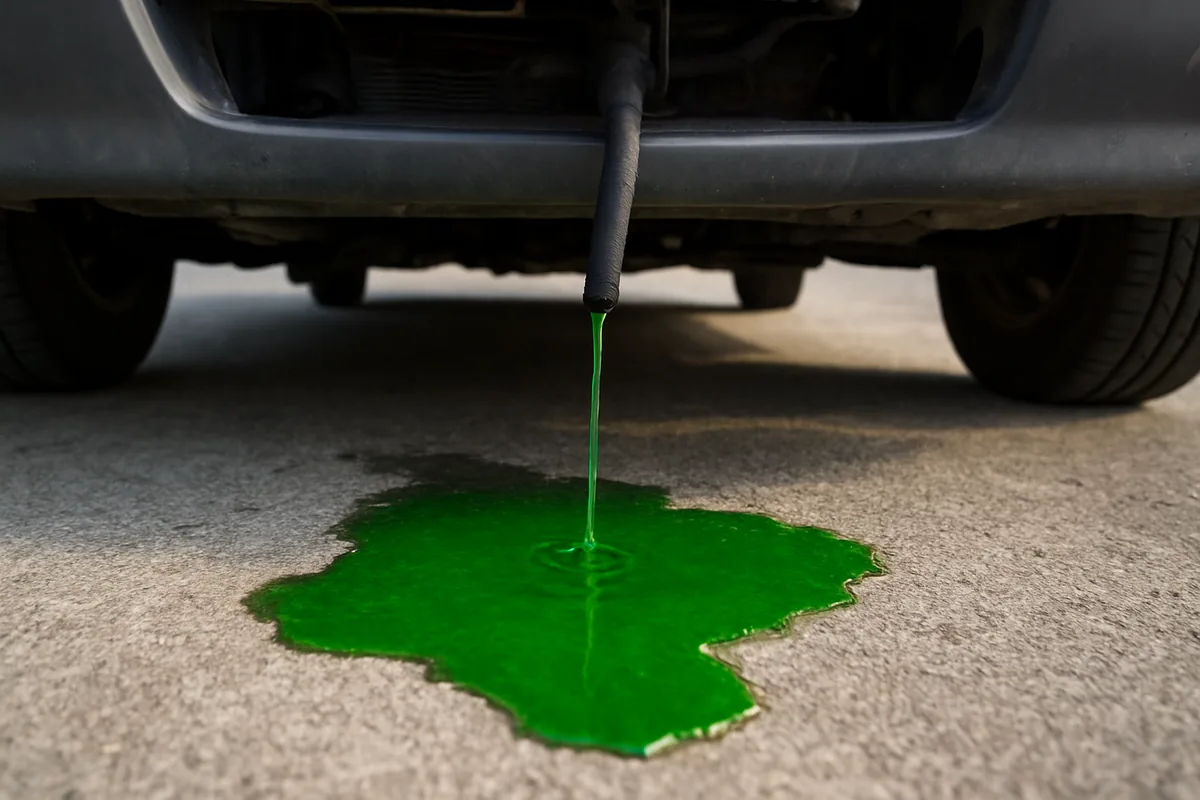
| What it is | Leaking engine coolant, which smells sweet |
| The diagnostic tell | Where you smell it points to which part is leaking |
| Inside the cabin | Heater core, especially with a foggy windshield |
| The serious one | Sweet white exhaust smoke plus overheating means head gasket |
| The hazards | Coolant is toxic. A hot cooling system scalds. |
| Safe to drive? | Briefly, if the temperature is steady. Not if overheating. |
A sweet smell is the one car odor almost nobody misinterprets as harmless, and rightly so. Nothing else in a car smells like syrup, so the cause is rarely in doubt. The useful question is not what it is but where it is coming from, because that decides whether you are facing a hose clamp or an engine out.
This page uses location to narrow the source, covers the three main leak types, and gives the honest safety picture on a fluid that is genuinely poisonous. For the full odor index, see the complete car smells guide.
Repair costs vary enormously by vehicle, especially for a heater core, where labor dominates. No figures are given here, so get a quote for your car. Coolant color varies between green, orange, pink and blue depending on the type, so color alone identifies neither the leak nor its severity.
Table of Contents
Where do you smell it? Source by location
Location narrows a sweet smell to a specific suspect faster than anything else you can do without tools. Coolant travels from the engine, through hoses, to the radiator at the front and to the heater core behind your dashboard, so the point where the smell is strongest tells you which leg of that circuit has failed.
| Where you smell it | Likely source | How serious |
|---|---|---|
| Inside the cabin, with a greasy film on the windshield and damp front passenger carpet | Leaking heater core | Fix promptly. Fogging affects visibility |
| Inside the cabin, stronger with the heat running | Heater core or a hose behind the dash | Get it inspected soon |
| Under the hood, strongest with the hood open | Radiator, hose, water pump, reservoir or cap | Locate and repair. Watch the level |
| Outside, with a puddle where you park | An external leak somewhere in the circuit | Easiest to find. Repair before it worsens |
| From the exhaust, with sweet white smoke and overheating | Head gasket or another internal leak | Serious. Stop driving |
| No obvious location, but the level keeps dropping | A small leak evaporating off hot parts, or an internal one | Needs a pressure test at a shop |
Work down that table in order and most people land on their answer in a minute. If the smell is sour or musty rather than sweet, you are in the wrong place entirely, and that one is mold on the AC evaporator rather than a leak, covered in why a car AC smells musty.
The heater core leak: a sweet smell inside the car
A sweet smell inside the cabin usually means the heater core is leaking, and it comes with two tells that confirm it. The first is a greasy, hard-to-clear film on the inside of the windshield that returns after you wipe it. The second is a damp or soaked front passenger carpet, because that is where coolant collects once it escapes the heater box.
The heater core is a small radiator buried behind your dashboard that the cabin’s warm air blows through. When it leaks, coolant vapor goes into the vents along with the air, which is why you smell it strongest with the heat or the fan running. Windows that fog quickly and stay foggy are the same phenomenon.
Treat the fogging as the urgent part rather than the smell. A windshield that will not clear is a visibility problem while you are driving, and running the fan only spreads more vapor across the glass. Use fresh air rather than recirculate, and keep a window cracked, until it is repaired.
This is shop work rather than a driveway job, because reaching a heater core often means removing much of the dashboard. That is also why the labor dominates the bill. A related symptom worth knowing is a heater that only works while moving, which points at low coolant from the same underlying leak, and is covered in a car heater that only works when driving.
Under-hood leaks: radiator, hoses, water pump
A sweet smell strongest under the hood or outside the car usually means coolant is escaping from the radiator, a hose, the water pump, the reservoir, or a loose or failed pressure cap. These are the easiest leaks to find, because coolant leaves visible evidence: wet trails, crusty dried residue, and drips onto the ground beneath.
Look for staining in green, orange, pink or blue depending on your coolant type, and follow it upward to the highest wet point rather than the lowest. A hose that is soft, bulging or cracked near a clamp is a common and cheap culprit. Water pump leaks often show as residue near a weep hole behind the pulley.
Caution: check coolant only when the engine is completely cold. The cooling system is pressurized when hot, and Ford’s owner’s manual guidance is explicit that you should never remove the coolant reservoir cap while the engine is running or hot, because steam and hot liquid can come out forcefully. Scalding from a coolant cap is a common and entirely avoidable injury.
Top-up rate is a useful measure of severity. Ford’s guidance is that needing to add more than about a liter of coolant per month warrants having the vehicle checked, since running an engine low on coolant risks overheating and engine damage. If your car is going through coolant faster than that, the pattern and its causes are covered in why a car goes through coolant so fast.
Sealants deserve one honest sentence. Stop-leak products can temporarily slow a small leak, but they are a way to reach a shop rather than a repair, and manufacturers warn against them: Ford’s manual states plainly that stop leak pellets and cooling system sealants can damage the cooling and heating systems, and that resulting damage may not be covered by warranty.
The serious one: a blown head gasket
A sweet smell combined with white, sweet-smelling exhaust smoke, unexplained coolant loss, or overheating can mean a blown head gasket, where coolant is being burned inside the engine. This is the one case on the page where the answer is stop driving rather than book a repair, because continuing risks turning a serious repair into a replacement engine.
Four signs cluster together when this is what is happening. White smoke from the exhaust that smells sweet rather than like normal condensation. Coolant disappearing with no puddle anywhere. Overheating that keeps returning after topping up. And a milky, coffee-colored film on the oil dipstick or under the oil filler cap, which means coolant has reached the oil.
Check the oil, since it is the fastest confirmation available to an owner and takes a minute. Milky or tan oil on the dipstick means coolant and oil have mixed, and the method is in how to check your engine oil level. Exhaust smoke is the other half of the picture, and separating normal condensation from a real problem is covered in why a car smokes but is not overheating.
Hand this one to a mechanic without attempting a diagnosis yourself. A shop confirms it with a pressure test or a combustion-gas test of the coolant, and the difference between a head gasket, a cracked head and a warped surface changes the repair completely.
Is a coolant smell dangerous?
A coolant smell carries two real risks, and neither is the smell itself. The first is that coolant is poisonous. The second is that losing it leads to overheating, which damages engines. A faint smell with a steady temperature gauge and a stable coolant level is not an emergency, but a fast leak or a rising temperature is.
Most coolant contains ethylene glycol, and the danger is exactly the property you are noticing. The ATSDR describes ethylene glycol as odorless but sweet-tasting, and warns that exposure to large amounts can damage the kidneys, nervous system, lungs and heart, advising against spilling or draining antifreeze on the ground where children might play in a puddle of it.
Pets are the bigger everyday risk, because a dog or cat will drink a spill that a person never would. Poison Control notes that antifreeze poisoning is difficult to identify early, since everything can seem fine for several hours after it is swallowed while the damage is already under way. That delay is why waiting to see what happens is the wrong response.
Caution: clean up every coolant spill on a driveway or garage floor immediately, and keep pets and children away from it. Call Poison Control at 1-800-222-1222 or 911 straight away if a person or animal may have swallowed coolant, rather than waiting for symptoms.
The overheating side is simpler. Watch the temperature gauge rather than the smell, and stop if it climbs toward the red. What to do when it does, and why it happens, is covered in why a car overheats.
Frequently asked questions
Why does my car smell like maple syrup?
A maple-syrup smell is leaking engine coolant, which is sweet-smelling by nature. Smelling it inside the car, especially with a foggy windshield, usually points to the heater core. Smelling it under the hood usually points to the radiator, a hose, or the water pump.
Is it safe to drive with a coolant leak?
Driving with a coolant leak is safe only briefly and only if the temperature gauge stays normal. Stop driving if the car is overheating or losing coolant quickly, because overheating can severely damage the engine. A slow leak with a steady gauge can usually reach a shop.
Why do I smell coolant but see no leak?
Coolant can leak in amounts small enough to evaporate off hot engine parts before reaching the ground, leaving a smell but no puddle. It can also leak internally through the heater core or a head gasket. Check the coolant level, the carpet, and the exhaust.
How much does a heater core leak cost to fix?
Heater core repair costs vary widely because the part itself is often modest while the labor is not. Reaching it frequently means removing much of the dashboard, so labor dominates the bill. Get a quote for your specific vehicle rather than working from a general figure.
What to do now
Use location to find the source: inside the cabin with a foggy windshield points to the heater core, under the hood points to the radiator, a hose or the water pump, and sweet white exhaust smoke with overheating points to a head gasket. Check the coolant level once the engine is completely cold, and watch the temperature gauge on every drive until it is repaired. Safe to drive: briefly, if the gauge stays normal. Stop driving if the car is overheating or losing coolant fast. Caution: never open a hot coolant cap, clean up every spill, and keep pets and children away from it, because coolant is poisonous.
For the full odor index, see the complete car smells guide, or browse the wider automotive care and repair section.
