

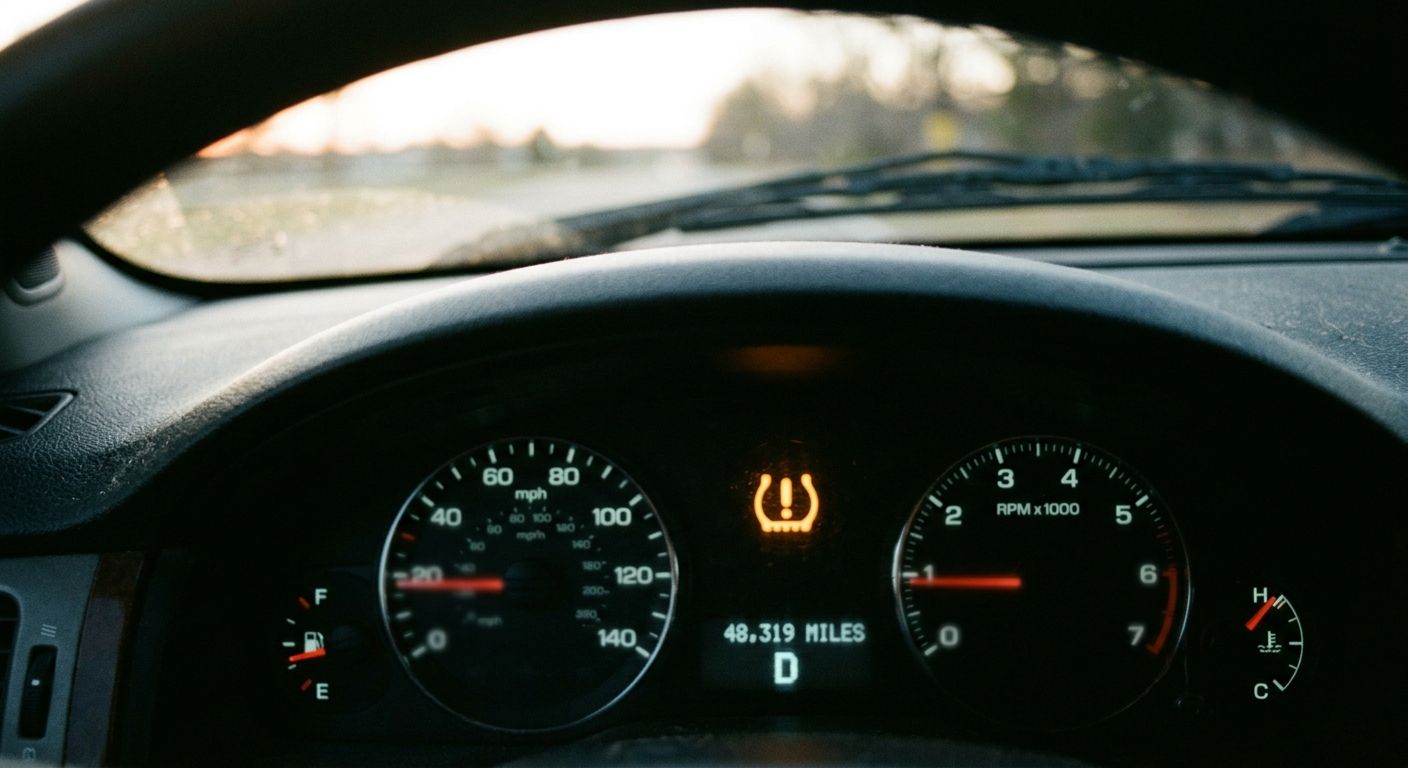
At a Glance
| What it means | At least one tire is significantly underinflated |
| Steady light | Low pressure. Check all four and inflate |
| Flashing, then steady | A system or sensor fault. Air will not fix it |
| The number to use | The door placard PSI, never the sidewall maximum |
| Cold mornings | The light often appears as temperatures drop |
| Safe to drive? | Check soon. A very low or flat tire, do not drive far |
Two things about this light trip people up, and both change what you should do. The first is that a flashing TPMS light and a steady one mean completely different things. The second is that the pressure number most drivers reach for is the wrong one, and it is printed on the tire itself.
This page covers both, then the reasons the light comes on and why it sometimes refuses to go off. For the rest of the symbols, see the complete dashboard lights and car terms guide.
Your correct tire pressure is specific to your vehicle and is printed on the placard in the driver’s door jamb, so no PSI figures appear on this page. TPMS reset and relearn procedures also vary by manufacturer, so check your owner’s manual for yours.
Table of Contents
Solid light versus flashing light
A steady TPMS light and a flashing one are two different messages from the same lamp. NHTSA describes the steady case plainly: when the TPMS symbol appears, at least one tire is significantly underinflated, you should inspect the tires and check the pressure as soon as possible, and the symbol will extinguish once they are properly inflated.
A light that flashes first is telling you something else entirely, and the behaviour is written into federal regulation rather than being a manufacturer quirk.
| Steady light | Flashes, then stays on | |
|---|---|---|
| What it means | At least one tire is significantly underinflated | A TPMS sensor or system malfunction |
| Usual cause | Cold weather, a slow leak, or gradual pressure loss | A dead sensor battery, a damaged or unregistered sensor, or a receiver fault |
| What to do | Check all four with a gauge and inflate to the placard | Have the system scanned. It needs service, not air |
| Will adding air clear it? | Usually, after a short drive | No |
The flash duration is specified rather than approximate. Federal Motor Vehicle Safety Standard 138 requires a combined low-pressure and malfunction telltale to flash for at least 60 seconds and no longer than 90 seconds when a malfunction is detected, then remain continuously illuminated as long as the malfunction exists, repeating that sequence every time you switch the ignition on until it is fixed.
So a light that blinks for about a minute each time you start the car, then settles to steady, is reporting a broken monitoring system. Your tires may be perfectly inflated. Adding air will not turn it off.
Inflate to the door placard, not the sidewall
Use the pressure printed on the placard in your driver’s door jamb, not the higher number moulded into the tire. That sidewall figure is the tire’s maximum safe cold pressure, a structural ceiling set by the tire maker. The placard figure is what your vehicle’s manufacturer determined the car should actually run, and the two are frequently ten PSI or more apart.
Both federal sources say the same thing. NHTSA advises filling to the recommended cold inflation pressure indicated on the vehicle’s tire information placard or certification label. The Department of Energy’s guidance is the same, telling drivers to use the pressure recommended in the owner’s manual or on the door jamb sticker, and not the maximum pressure stamped on the tire.
Check when the tires are cold, meaning before driving or at least a few hours after, because rolling heats the air inside and reads higher than the true cold pressure. Check all four, and note that some vehicles specify different front and rear pressures, both listed on the same placard.
The full explanation of finding and setting your number lives in the correct tire pressure for your car. Whether you can leave the engine running while you do it is answered in whether you can leave the car on while putting air in the tires.
Why the TPMS light comes on
Five things trigger this light, and the first is by far the most common seasonal cause. Air contracts as it cools, so a car that was correctly inflated in September can trip its own warning on the first cold morning in November without anything being wrong with it.
| Cause | How to confirm it | What to do |
|---|---|---|
| A drop in temperature (most common seasonally) | Light appears on a cold morning and may clear once the tires warm up | Check cold and inflate to the placard pressure |
| A slow leak or puncture | One tire consistently reads lower than the other three | Find and repair the leak rather than topping it up weekly |
| Gradual pressure loss over time | All four slightly low, and it has been months since a check | Inflate to placard, then check monthly |
| A sudden puncture | Light appears abruptly, sometimes with a change in handling or noise | Pull over somewhere safe and inspect the tires |
| A TPMS sensor fault | Light flashes at startup while the pressures are actually correct | Sensor or system service |
NHTSA notes the cold-weather pattern directly, observing that on cold mornings the TPMS symbol may illuminate for a short period and then turn off. Treat that as a prompt to check rather than as a fault, because a tire sitting right at the warning threshold is genuinely low even if the light clears by mid-morning. The seasonal effect is covered in whether car tires lose air in cold weather.
One tire that keeps needing air is a different story. That is a leak, and topping it up repeatedly just delays finding it, which is worked through in why car tires keep losing air and how to fix a slow leak in a car tire.
Why won’t my TPMS light turn off?
A light that stays on after you have inflated the tires usually needs one of three things: a short drive, a manual reset, or a sensor repair. Most systems need the car moving at a reasonable speed for a few minutes before they re-read all four wheels and clear the warning, so the light rarely goes out in the driveway.
If a drive does not clear it, your vehicle may need a reset or relearn procedure. These are common after a tire change, a rotation, or new sensors, and the method varies enough between manufacturers that your owner’s manual is the only reliable guide. Some cars use a button, some a menu sequence, and some need a shop tool.
A light that persists with correct pressures and a completed reset points at the system itself. That is the flashing case from earlier, and it means a sensor, a sensor battery, or the receiver needs attention. Sensor batteries are sealed and eventually die, which is why the fault often appears on older vehicles with no warning at all.
Frequently asked questions
Is it safe to drive with the TPMS light on?
Driving briefly is usually acceptable, but check your tires soon, because underinflation hurts handling and braking, wears tires unevenly and raises the risk of a blowout. If a tire is very low or flat, do not drive far. Add air or fit the spare first.
Why did my TPMS light come on in cold weather?
Air contracts as it cools, so tire pressure falls with the temperature and a cold morning can push a tire below the warning threshold. NHTSA notes the symbol may illuminate briefly on cold mornings then turn off. Top up to the placard pressure and it usually stays off.
Why is my TPMS light flashing?
A TPMS light that flashes for roughly a minute at startup and then stays on signals a system or sensor malfunction rather than low pressure. Federal rules require that flash pattern for a detected fault. Common causes are a dead sensor battery or a damaged sensor, and it needs service.
How do I reset the TPMS light?
Inflate all tires to the placard pressure first, then drive for a few minutes so the system re-reads each wheel, which clears most warnings. If it stays on, follow the reset or relearn procedure in your owner’s manual, since the method differs by manufacturer and is often needed after a rotation.
What to do now
Look at the light before you look at the tires, because a steady light and a flashing one need different responses. Steady means at least one tire is significantly underinflated, so check all four with a gauge and inflate to the pressure on your door jamb placard, never the maximum number on the tire sidewall. Flashing for about a minute and then staying on means the monitoring system itself has a fault, and no amount of air will clear it. Check the tires cold, drive a few minutes to let the system reset, and look for a leak if the same tire keeps going down. Safe to drive: check soon, but do not drive far on a tire that is very low or flat.
For the rest of the warning lights and car terms, see the complete dashboard lights and car terms guide, or browse the wider automotive care and repair section.
