

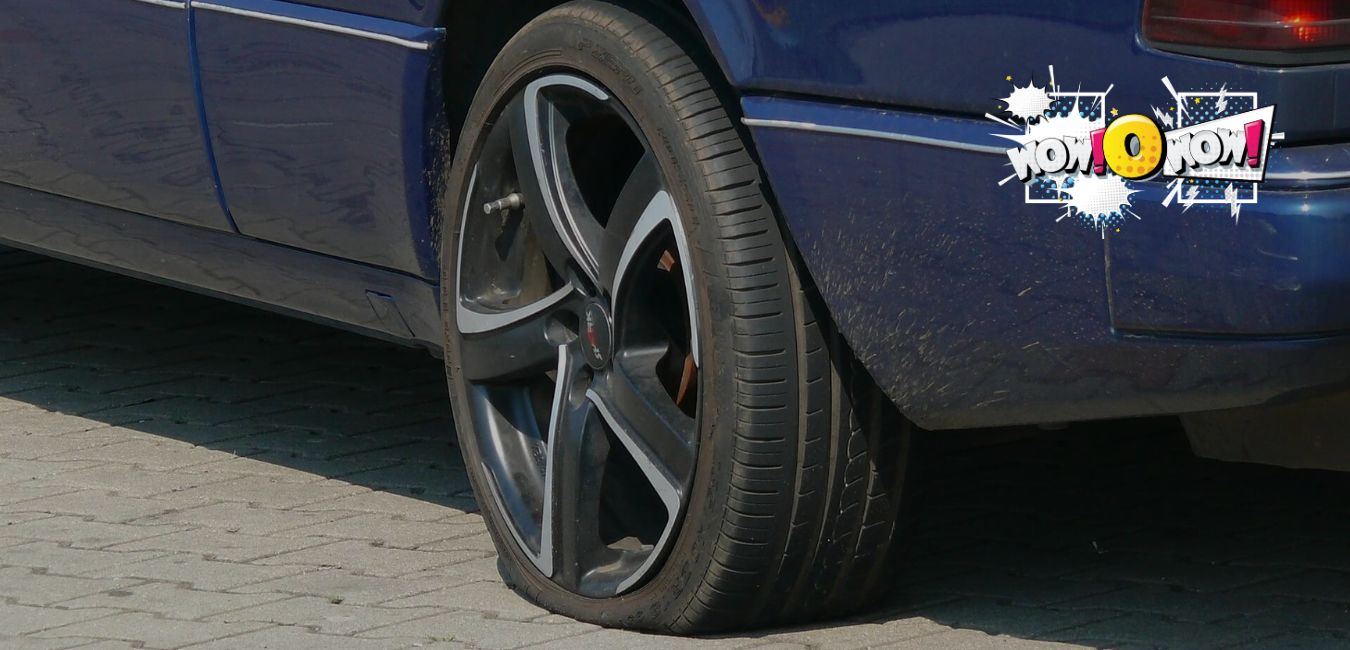
| One tire or all four? | One means a fault; all four means often normal or cold |
| Safe to drive? | Yes if kept at the placard pressure; repair a fast leak, and never drive on a flat |
| Normal loss | About 1 PSI a month, plus roughly 1 PSI per 10°F drop |
| Most common fault | A slow puncture, a leaking valve, or a corroded rim |
| No nail? | Usually the valve or the rim bead, not the tread |
| Old tire? | Dry rot and cracking mean replace, not repair |
A tire that keeps going low is one of the most common and most misread car problems, because people assume a leak when some of the loss is normal. The trick is to separate a real fault from ordinary air loss, then find which of a handful of causes is behind it. This guide ranks the causes, gives the confirming sign for each, and points you to the repair. A tire that repeatedly runs low is worth fixing, since the U.S. Department of Energy’s fueleconomy.gov notes that under-inflated tires wear faster and waste fuel.
The permeation and temperature figures below are approximate rules of thumb. Your correct pressure is the cold number on the driver’s-door placard.
Table of Contents
One tire or all of them? Start here
The single fastest way to diagnose air loss is to check whether it is one tire or all four. One tire losing air while the others hold steady almost always means a specific fault in that tire, such as a puncture, a valve leak, or a corroded rim seal. All four dropping at a similar, slow rate usually is not four simultaneous leaks: it is normal permeation, a cold snap, or a gauge that reads a little differently each time.
| What you see | Likely cause | Next step |
|---|---|---|
| One tire keeps going low | A fault in that tire: puncture, valve, or rim seal | Find the leak and repair it |
| All four drop evenly and slowly | Normal permeation, about 1 PSI a month | Top up; it is usually not a leak |
| All four drop after a cold snap | Temperature, not a leak | Top up to the placard PSI; recheck when warm |
| One tire drops fast, within days | An active leak that is worsening | Inspect and repair promptly |
If the whole set went down together after the temperature dropped, that is physics rather than a fault, explained in our guide to whether car tires lose air in cold weather.
Is this even a leak? Normal air loss explained
Not all air loss is a leak. Tires naturally lose roughly 1 PSI per month through the rubber itself, a slow seepage called permeation, plus about 1 PSI for every 10°F the temperature falls. So a tire that is a few PSI low after a month, or after the first cold morning of the season, can be completely normal. What signals a real fault is speed: a tire that drops noticeably within a few days is leaking, not seeping.
The way to tell them apart is to check all four tires cold with a gauge and write down the numbers. Per NHTSA, you should check tire pressure at least monthly against the cold figure on the driver’s-door placard, not the maximum on the sidewall. If one tire is consistently lower than the rest each time you check, that is your fault. If they drift down together, top them up and stop chasing a leak that is not there. Our guide to the correct tire pressure for your car shows where to find your number.
The 6 causes of a tire that keeps losing air
A tire that keeps losing air has one of six common causes, ranked here from most to least frequent. The table gives the confirming sign for each, and whether it is a repair or a replacement.
| Cause | How to confirm | Fix or replace |
|---|---|---|
| Slow puncture (nail or screw) | Soapy water bubbles on the tread; a visible object | Repair at a shop (tread punctures only) |
| Leaking valve stem or core | Bubbles at the valve; a hardened or cracked stem | Replace the valve |
| Corroded rim or bead seal | Bubbles where the tire meets the wheel; older alloy wheels | Dismount and reseal at a shop |
| Cold weather (not a leak) | All tires low after a temperature drop | Top up to the placard PSI |
| Old or porous tire, dry rot | Fine sidewall cracking; tire past 6 to 10 years | Replace the tire |
| Bent or damaged wheel | Air loss that started after a pothole or curb strike | Repair or replace the wheel |
The first three, a puncture, a valve, and a rim-seal leak, account for most single-tire faults. Once you have found which one it is, our guide to how to fix a slow leak in a car tire covers the repair itself, including which punctures can be fixed and which mean a new tire.
How to find the leak yourself
Finding the leak takes a spray bottle of soapy water and a few minutes. This is the quick version; the full repair lives on the fix-it guide.
- Inflate the tire to the placard pressure. A leak shows up best at full pressure, so top the tire up first.
- Brush soapy water over the tread, the valve, and the rim edge. Wet all three areas and watch closely, because the leak can be at any of them.
- Watch for growing bubbles and mark the spot. Bubbles on the tread mean a puncture, at the valve mean a valve leak, and at the rim mean a bead-seal leak. Circle the spot so you can find it again.
Caution: if you raise the car to inspect a tire, support it on jack stands and never rely on the jack alone. Once you know where the air is escaping, the next step is to repair or replace it, depending on the cause.
When is it the tire itself, from age or dry rot?
Sometimes the tire itself is the leak. An older tire loses air through age-hardened, cracked rubber, known as dry rot, or through a casing that has simply grown porous with time. Look for fine cracking across the sidewall and in the tread grooves, which is the visual tell of a tire that has aged out. You can check a tire’s age from the DOT date code on the sidewall, which ends in a four-digit week-and-year stamp.
A dry-rotted or aged tire should be replaced, not repaired, because the cracking weakens the tire and it can fail under load. Per NHTSA, some manufacturers recommend replacing tires after about 6 years regardless of tread, and many set a hard limit near 10. If only one tire is aged or damaged, our guide to replacing just one tire covers whether you can, or whether you need a pair.
Frequently asked questions
Is it normal for tires to lose air over time?
Yes, it is normal for tires to lose a little air over time. A tire naturally seeps about 1 PSI a month through the rubber, and it drops further in cold weather. Losing a few PSI slowly over a month is normal, but a tire that drops noticeably within a few days has a real leak that needs finding.
Why is only one tire losing air?
One tire losing air while the others hold steady points to a specific fault in that tire, rather than normal loss, which affects all four fairly evenly. The usual single-tire faults are a slow puncture, a leaking valve stem, or a corroded rim seal. Use soapy water on the tread, valve, and rim to find which one it is.
Why do my tires lose air but there is no nail?
Air loss with no visible nail is usually the valve stem or core, a corroded rim bead, or an aged, porous tire rather than a tread puncture. These are the leaks people miss because they only look at the tread. Brushing soapy water over the valve and the rim edge usually reveals the bubbles and shows where the air is escaping.
Can a slow leak fix itself?
No, a slow leak does not fix itself. A puncture, a bad valve, or a corroded seal will not heal, and the air loss usually gets worse over time, not better. Topping the tire up repeatedly only masks the problem, so find the cause and repair it rather than living with a tire you refill every week.
What to do now
Diagnose before you repair: check whether it is one tire or all four, rule out the normal 1 PSI a month and cold-weather loss, then find the leak with soapy water on the tread, valve, and rim. One tire going low is a fault to fix; all four drifting down together is usually just topping-up. Keep every tire at the placard pressure in the meantime, since a tire that runs low wears unevenly and grips worse.
Once you have found the source, our guide to how to fix a slow leak in a car tire covers the repair. For everything else tire-related, see our complete car tire guide, and for the rest of the car, our car care and troubleshooting hub.
