

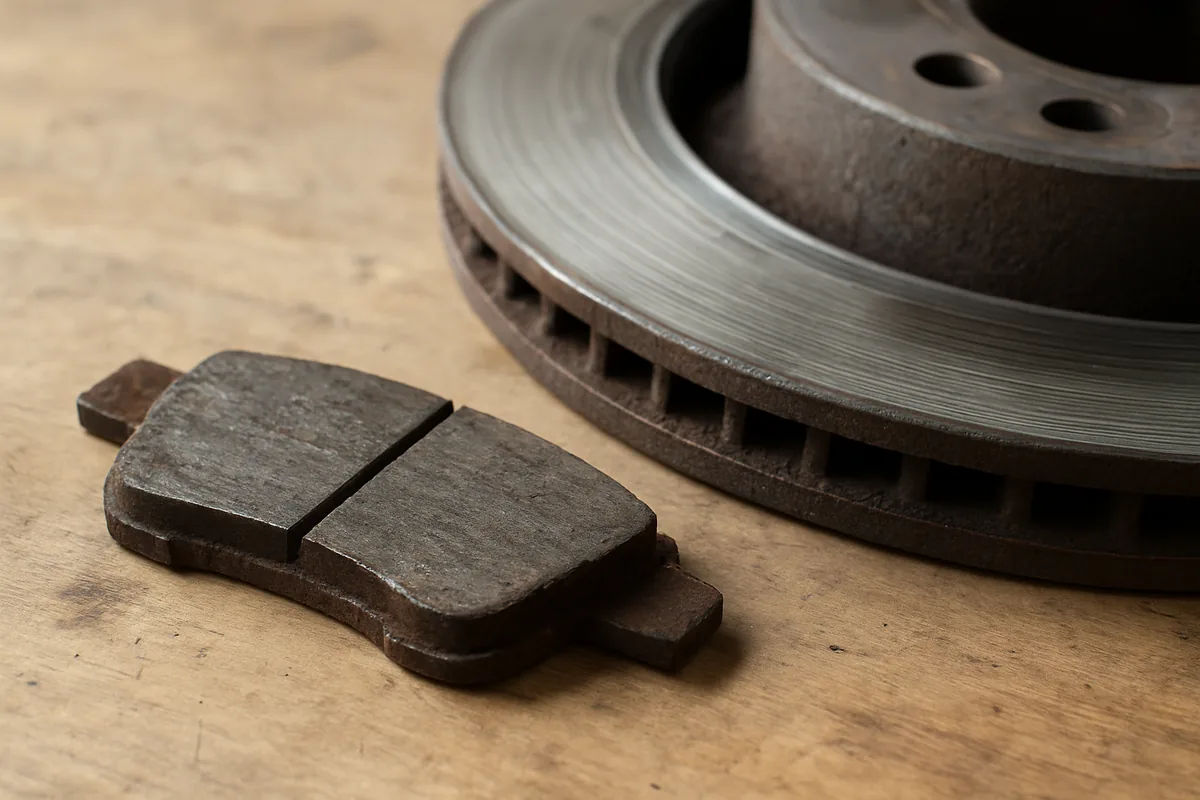
| Most likely cause | Brake pads worn through to the metal backing plate |
| Safe to drive? | No, not with constant grinding. Get it inspected now. |
| Grinds every stop | Worn-out pads, metal on the rotor. Stop. |
| Grinds only first thing | Surface rust clearing. Usually benign if it fades. |
| Grinds with speed, not the pedal | More likely a wheel bearing than the brakes |
| DIY or shop? | Shop. Brake repair is not a DIY job. |
A grinding noise from the brakes is one of the clearest “deal with this now” signals a car gives you, because in most cases it means the pads are gone and you are braking on bare metal. But not every grind is the same emergency, and the timing of the noise tells you which one you have. This guide sorts the serious grind from the harmless one, and the brake grind from a wheel-bearing grind that has nothing to do with your pads.
Brake pad life and repair costs vary widely by vehicle and driving style. Treat any mileage or cost here as a rough range, and have the actual condition confirmed by a shop.
Table of Contents
Is it safe to drive with grinding brakes?
No, it is not safe to drive with brakes that grind every time you press the pedal. Constant grinding means the pads have worn through and metal is pressing on the rotor, so your stopping distance is longer and every stop cuts deeper grooves into the rotor. That turns a pad replacement into a pad-and-rotor job, and in a hard stop the reduced braking is a real safety risk. The Car Care Council warns specifically against letting brakes reach this metal-to-metal point, and AAA lists a grinding noise as a strong sign the brakes have worn thin and should be inspected as soon as possible.
The one exception is a short grind on the first stop or two after the car has been parked overnight or sat in the rain, which is a thin film of surface rust wearing off the rotors. If it clears within a few stops and does not come back, that is normal. A grind that is there on every stop is not. When in doubt, treat it as the serious case and get it looked at.
When does the grinding happen? Start here
Work out when the grinding happens, because the timing points straight at the cause and tells you how urgent it is. A grind on every brake application is worn pads. A grind only on the first stop of the day is usually rust. A grind that tracks with your speed rather than the pedal is probably not the brakes at all. Match your situation to the table, then read the matching section.
| When it grinds | Most likely cause | What to do |
|---|---|---|
| Every time you brake | Brake pads worn through to metal | Stop driving, get it inspected now |
| Only the first stop or two after sitting | Surface rust on the rotors clearing off | Usually fine if it fades within a few stops |
| While driving, changing with speed, not the pedal | A failing wheel bearing, not the brakes | Have it inspected promptly |
| With pulling to one side or a burning smell | A stuck or seized caliper | Stop, it can overheat. Get it checked. |
| With a pulsing pedal or steering shake | A warped or badly scored rotor | Have it inspected soon |
| Comes and goes, a rattly scrape | A stone or debris caught near the brake | Have it checked; it may clear on its own |
Some of these overlap with other symptoms. If the grinding comes with a shake, our guides to why your car shakes when you brake and a car that shakes at 60 mph help you tell a warped rotor from a wheel or tire problem, and why your car jerks when you brake covers the pulsing-pedal case.
Worn-out brake pads (the usual cause)
Worn-out brake pads are behind most grinding brakes, and the grind is the second warning, not the first. Brake pads have a small metal wear indicator that touches the rotor as the pad gets thin and makes a high-pitched squeal, telling you it is time for new pads. If that squeal is ignored long enough, the pad material wears away completely and the steel backing plate presses directly on the rotor, which is the deep metallic grinding you hear. In other words, grinding usually means an earlier squeal went unheeded.
Once it reaches metal-on-metal, two things are happening at once: braking performance drops, and the rotor is being scored with every stop. Consumer Reports notes that a grinding sound means replacement is overdue and the worn pads may be damaging the rotors. You may also feel a lower or softer brake pedal and see the thin pads through the wheel spokes.
Caution: worn-through brake pads are a safety problem, and replacing brakes is a job for a professional, not a driveway fix. This page will not walk you through changing pads, because getting brake work wrong risks your ability to stop. Have a shop inspect and replace them. For how long pads normally last before this point, see our guide to how long car brakes last.
Other causes: rust, caliper, rotor, or debris
When it is not simply worn pads, a grinding or scraping brake noise usually comes from one of four other sources, and their extra symptoms tell them apart. Surface rust clears on its own; a stuck caliper adds pulling and heat; a warped rotor adds a pulsing pedal; and trapped debris comes and goes.
| Cause | The tell | What to do |
|---|---|---|
| Surface rust on the rotors | Brief grind only on the first stops after sitting, then gone | Benign if it clears; no action needed |
| Seized or sticking caliper | Grinding plus pulling to one side, heat, or a burning smell | Stop, it can overheat. Get it checked. |
| Warped or scored rotor | Grinding or scraping with a pulsing pedal or steering shake | Have it inspected soon |
| Stone or debris in the brake | A scrape that comes and goes, often after gravel | Have it checked; may dislodge on its own |
Caution: a seized caliper keeps the pad dragging on the rotor even when you are not braking, which builds extreme heat. That heat can boil the brake fluid, damage seals, and in severe cases make the brake smoke or smell hot. If one wheel is pulling, running hot, or giving off a burning smell, stop and have it towed or inspected rather than driving on it.
Is a grinding noise the brakes or a wheel bearing?
A grinding or growling noise is more likely a wheel bearing than the brakes if it happens while you are driving and changes with your speed, rather than when you press the pedal. Brake grinding tracks with the brake pedal: it appears or worsens as you brake and eases when you let off. A failing wheel bearing instead makes a cyclic growl or grind that rises and falls with road speed and often changes when you turn or shift the car’s weight from side to side.
The quick test is simply what the noise responds to. If it responds to the pedal, think brakes. If it responds to speed and steering, think wheel bearing or another rotating part. Either way it needs a shop, because a failing wheel bearing can eventually seize. Getting the right diagnosis first saves you from replacing pads that were never the problem. Our complete car tire guide covers the wheel-and-hub side of these noises.
How much does it cost to fix?
The cost of fixing grinding brakes climbs the longer you wait, which is the whole reason not to keep driving on them. Caught at the squeal stage, it is usually just pads. By the grinding stage, the rotors are often scored and need resurfacing or replacing too, and if a caliper has seized, that adds more again. Prices vary by vehicle and region and are charged per axle, so get a quote, but the direction is always the same: cheapest early, dearest late.
| Scenario | What is needed | Relative cost |
|---|---|---|
| Caught early (squeal stage) | Pads only | Lowest |
| Grinding stage | Pads plus rotor resurfacing or replacement | Higher |
| Grinding ignored | Pads, rotors, and a seized caliper | Highest |
The takeaway is simple: a grind you fix this week is a pad job, and a grind you drive on for a month can become a pad, rotor, and caliper job. That escalation is exactly why the safe-to-drive answer is to stop and have it seen now.
Frequently asked questions
How long can I drive with grinding brakes?
You should not keep driving on brakes that grind constantly, because braking is already compromised and every stop damages the rotor further. Drive only as far as needed to reach a shop safely, or have the car towed. There is no safe number of miles to keep grinding metal on metal.
Why do my brakes grind in the morning but stop after a bit?
A brief grind on the first few stops after the car sits overnight or in the rain is usually a thin layer of surface rust on the rotors wearing off. If it clears within a few stops and does not return, it is normal. A grind that stays on every stop is worn pads and needs inspection.
Can I just replace the pads if they’re grinding?
Often not, because once pads grind metal-on-metal they usually score the rotors, so the rotors typically need resurfacing or replacing too. A shop can tell you which once the wheel is off. Replacing only the pads on a scored rotor tends to bring the noise and the wear straight back.
Is grinding when braking always the brakes?
Not always. A grinding that happens while driving and changes with your speed rather than with the brake pedal can be a failing wheel bearing instead. Grinding that appears or worsens when you press the pedal points to the brakes. Either way, have it inspected promptly rather than guessing.
Why do my brakes grind with a burning smell?
Grinding with a burning smell often means a seized or sticking caliper holding the pad against the rotor, which builds extreme heat. That heat can damage the brake and, in bad cases, make it smoke. Stop driving and have it inspected or towed, because an overheating brake is a safety risk.
What to do now
Sort the grind by when it happens. If it grinds every time you brake, stop driving and have the brakes inspected now, because constant grinding means the pads are gone and you are braking on metal. A brief grind only on the first stops after the car has sat is usually harmless surface rust. A grind that changes with your speed rather than the pedal points to a wheel bearing, not the brakes. Whichever it is, brake work belongs at a shop. For more car sounds decoded in one place, see our complete car noises guide, and for how to check a brake system, our guide to testing your brakes. More help lives on our car care and troubleshooting hub.
