

| What to use | A fresh mix of hydrogen peroxide, baking soda, and dish soap |
| Why plain soap fails | Skunk oils smear instead of rinsing off; they have to be neutralized |
| Where to clean | Tires, tread grooves, and wheel wells, not just the tire face |
| Safety | Mix it fresh in an open container; never seal it, as it can burst |
| Skip these | Tomato juice (only masks it) and bleach |
A skunk hit near your car leaves the smell clinging to the tires and wheel wells, and the first instinct, hosing it down with soap and water, usually makes it worse. The reason is chemistry, not effort. This guide covers why plain washing fails, the mix that actually neutralizes the smell, where the odor really hides, and what to skip.
The method and cautions below follow published de-skunking guidance. Keep the cleaning agents generic: plain 3% hydrogen peroxide, baking soda, and dish soap are all you need.
Table of Contents
Why won’t plain soap and water work?
Plain soap and water do not remove skunk smell because skunk spray is made of oily sulfur compounds called thiols that cling to rubber and do not dissolve in water. Washing spreads the oils around instead of lifting them out, which is why a quick hose-down often leaves the tire smelling as bad as before, or worse. As the Humane Society notes, regular soap can actually make the odor worse rather than better.
The fix is to change the chemistry, not just scrub harder. Neutralizing the thiols by oxidizing them, which is what hydrogen peroxide does, is what actually kills the smell rather than moving it around. That is why the working method below is a chemical mix, not just a stronger detergent.
The peroxide method, step by step
The reliable way to neutralize skunk smell is the classic peroxide de-skunk mix, applied to the tires and wheel wells. Per Penn State Extension, this chemist-developed mix chemically neutralizes skunk odor, and it must be mixed in an open container and used immediately. The recipe is simple:
| Ingredient | Amount | What it does |
|---|---|---|
| 3% hydrogen peroxide (fresh bottle) | 1 quart | Oxidizes and neutralizes the oily skunk thiols |
| Baking soda | 1/4 cup | Boosts the reaction and helps deodorize |
| Liquid dish soap | 1 to 2 teaspoons | Cuts the oil so the mix can reach the smell |
- Mix the solution fresh. Combine the ingredients above in an open bucket and use the mix right away, while it is still active.
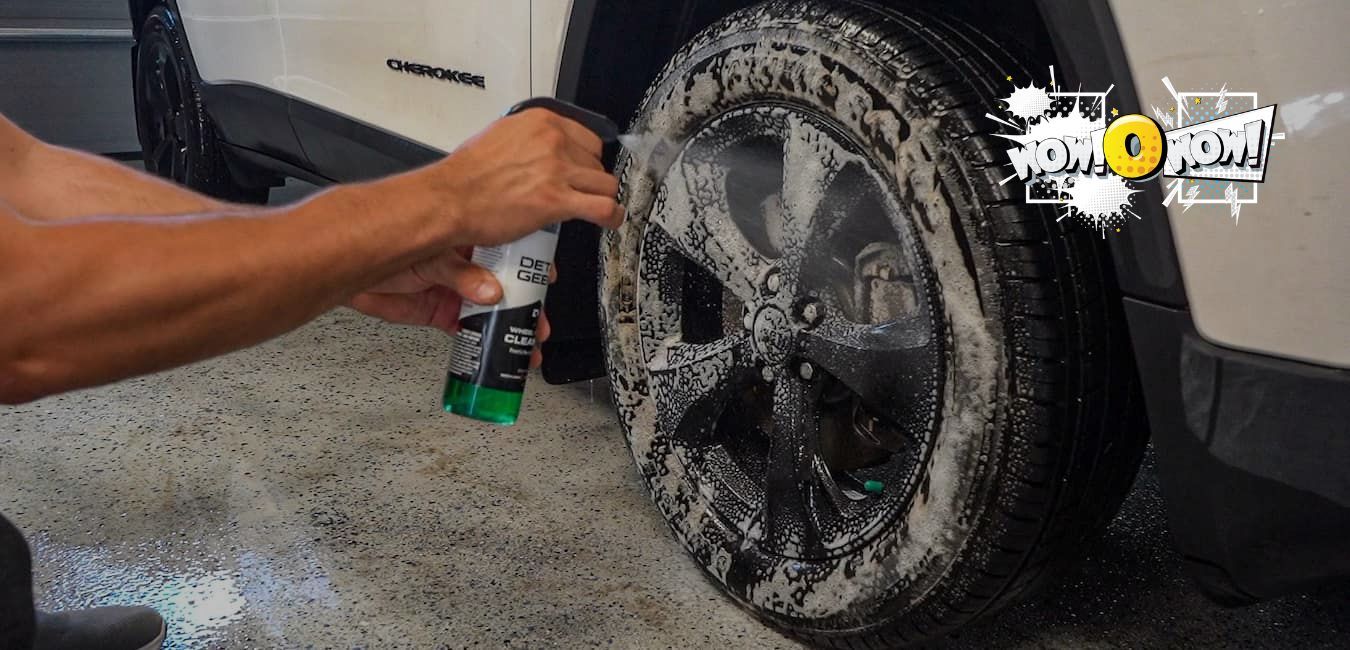
- Apply it to the tires, treads, and wheel wells. Work the solution into the tread grooves and up into the wheel wells, not just the outer tire face.
- Let it sit for a few minutes. Give it about five minutes to react with the oils rather than rinsing right away.
- Scrub with a stiff brush. Agitate the tread and wheel-well crevices where the spray settles.
- Rinse thoroughly with water. Flush the whole wheel area well, and rinse around the brakes rather than soaking them.
- Repeat if the smell lingers. A second treatment is normal for a strong hit.
Caution: mix the solution fresh and never seal it in a closed bottle, because the reaction releases oxygen gas and a capped container can burst. Use standard 3% household hydrogen peroxide rather than a stronger concentration, wear gloves, and keep it out of your eyes. Peroxide can lighten paint and fabric, so keep it on the tires and wheel wells and rinse any overspray off painted panels. Never mix it, or any cleaner, with bleach.
Don’t forget the wheel wells and undercarriage
The smell usually hides in the wheel wells, tread grooves, and undercarriage, not just on the visible tire, because the fine spray settles into every crevice it reaches. Cleaning only the smooth outer sidewall leaves most of the source untouched, which is why a first attempt often seems to fail. Treat the whole wheel area: the inner barrel of the wheel, the tread, the wheel-well liner, and any mud flaps or splash guards. Getting into those hidden spots is usually the difference between knocking the smell down and actually clearing it. If two or three full treatments still leave a strong smell, or the odor has soaked into the cabin, the carpet, or the ventilation system, hand the job to a professional detailer or an odor-removal service, since interior and HVAC odor removal is well beyond a driveway wash.
What not to use
A few popular fixes waste time or cause damage. This table sorts the common approaches into what actually neutralizes the smell and what to skip.
| Approach | Verdict | Why |
|---|---|---|
| Peroxide, baking soda, and dish soap mix | Use this | Neutralizes the oily thiols instead of spreading them |
| Plain soap and water | Not enough | Smears the oils around and leaves the smell |
| Tomato juice | Skip | Only masks the smell; it does not neutralize anything |
| Bleach | Avoid | Can damage trim and is dangerous mixed with other cleaners |
| Harsh solvents | Avoid | Can degrade rubber and ruin nearby paint and trim |
| Enzymatic pet-odor cleaner | Gentle follow-up | Breaks down any odor left after the peroxide treatment |
The tomato-juice myth is the big one to drop: it works on your nose, not on the smell. For everyday cleaning agents and what is safe to use on a car, see our guide to the best household soap to wash a car.
Frequently asked questions
What kills skunk smell on tires fast?
A fresh mix of hydrogen peroxide, baking soda, and a little dish soap kills skunk smell on tires when you scrub it into the tread and wheel wells and rinse. It works by neutralizing the oily skunk compounds rather than just washing them. Plain water alone will not remove the smell, and the mix must be used fresh.
Does the skunk smell go away on its own?
Skunk smell does fade on its own over days to weeks, but the oily compounds cling to rubber and settle into crevices like wheel wells, so it can linger far longer than you want. Neutralizing it with the peroxide mix is much faster than waiting it out, especially in warm, humid weather that keeps the odor active.
Will a car wash remove skunk smell?
A standard car wash usually will not fully remove skunk smell, because the detergents are not formulated to neutralize skunk thiols, and much of the spray hides in the wheel wells and undercarriage that a wash misses. A neutralizing treatment worked into those areas by hand does the job that a drive-through wash cannot.
Is skunk spray harmful to my tires?
Skunk spray does not harm tires. It is an odor problem, not a material one, so the rubber is not damaged and you can clean it off without worrying about the tire itself. The only caution is to avoid harsh solvents while cleaning, since those can degrade rubber and nearby trim more than the skunk spray ever would.
What to do now
Neutralize the smell rather than wash it: scrub the tires, tread grooves, and wheel wells with a fresh mix of hydrogen peroxide, baking soda, and dish soap, let it sit a few minutes, and rinse well. Mix it fresh in an open container, skip the tomato juice, and keep bleach out of it entirely. If the smell seems to be coming from inside the cabin rather than the tires, that is a different problem covered in our guide to car smells. For more cleaning help, see the complete car wash and paint guide and our car care hub.
