

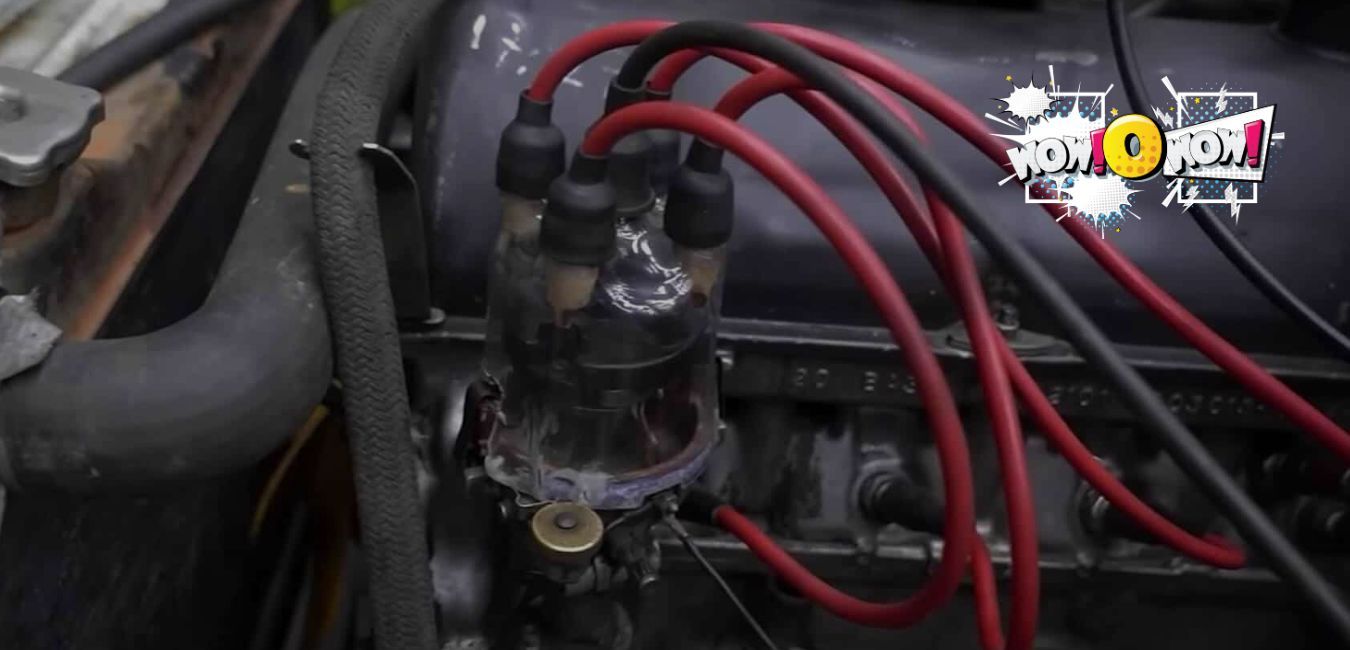
| What it is | An ignition component that sends spark to each spark plug in turn |
| What it does | Routes high voltage from the coil to each plug in the right firing order and timing |
| Main parts | Distributor cap, rotor, and on very old systems, points and a condenser |
| Found on | Older cars. Most cars built since the 1990s to 2000s are distributorless |
| Bad distributor signs | Misfires, rough running, hard starting or a no-start, sometimes a check-engine light |
| Modern replacement | Coil-on-plug: each spark plug has its own coil, controlled by the computer |
The distributor is one of those car parts people hear named without ever being told what it does, and the confusion is often sharper now because many drivers go looking for one and cannot find it. That is usually because the car does not have a distributor at all. This page explains what a distributor does, the parts it is made of, the signs that one is failing, and why most modern cars have replaced it entirely. For every other car term, see our complete dashboard lights and car terms guide.
Whether a car has a distributor depends on its age and design, and ignition parts vary by engine. Check your owner’s manual for your vehicle, and get a local quote before relying on any repair estimate.
Table of Contents
What does a distributor do?
A distributor takes the single high-voltage output from the ignition coil and sends it to each spark plug in turn, timed to each cylinder’s compression stroke. A rotor spinning inside the distributor cap directs the spark to the right terminal, so the engine fires its cylinders in the correct order. In short, it distributes one coil’s spark to many plugs at exactly the right moments.
The timing is the clever part. The distributor is driven by the engine’s camshaft, so it turns in step with the engine, and the rotor passes each contact in the cap just as that cylinder is ready to fire. Get the timing right and the engine runs smoothly; get it wrong and the engine misfires or will not start. That is why older cars needed their ignition timing set at the distributor, a routine part of a tune-up.
Parts of a distributor
A distributor is made of a few key parts, and the cap and rotor are the two most drivers ever deal with. The distributor cap is the plastic cover where the spark plug wires connect, the rotor is the spinning arm inside that directs the spark, and on very old systems a set of points and a condenser acted as the switch before electronic ignition replaced them.
| Part | What it does |
|---|---|
| Distributor cap | The plastic cover with a terminal for each spark plug wire; the spark exits here |
| Rotor | The spinning arm that routes the spark to each terminal in the cap in turn |
| Shaft | Driven by the camshaft; spins the rotor in time with the engine |
| Points and condenser (old systems) | The mechanical switch that triggered the coil, later replaced by electronic ignition |
| Electronic module (later systems) | Replaced the points with a sensor for more precise, maintenance-free timing |
The cap and rotor are wear items on any car that has them, which is why they were a standard tune-up replacement. The points-and-condenser setup is only found on genuinely old vehicles; from the 1970s and 1980s onward, electronic ignition took over that switching job, which is a useful way to date how old an ignition system is.
Signs of a bad distributor
A failing distributor usually shows up as an engine that misfires, runs rough, is hard to start, or will not start at all, and a check-engine light often comes with it. On an older car, a cracked distributor cap or a worn rotor is one of the most common culprits, because both sit in a hot, high-voltage environment and wear over time. Many of these faults are cured by replacing just the cap and rotor rather than the whole unit.
| Symptom | What it can point to |
|---|---|
| Engine misfires or runs rough | A cracked cap, worn rotor, or carbon tracking inside the cap |
| Hard starting or a no-start | The spark is not reaching the plugs; a damaged cap or rotor can cause it |
| Stalling or hesitation | An intermittent spark from a failing cap, rotor, or module |
| Check-engine light | A stored misfire code; a scan reads which cylinders are affected |
Because these symptoms overlap with other ignition faults, a distributor is rarely the only suspect. Worn spark plugs cause the same rough running, which our guide to whether bad spark plugs make a car shake covers, and a complete no-spark condition can leave a car cranking without starting, as in why a car won’t start but the radio works. A scan narrows it down, and our guide to what the check engine light means explains how misfire codes are read. Leave ignition-timing and internal distributor work to a technician you can verify through ASE certification.
Do modern cars have distributors?
Most modern cars do not have a distributor. Carmakers moved to distributorless ignition, usually coil-on-plug, where each spark plug has its own small ignition coil fired directly by the engine computer. There is no cap or rotor to wear out and no mechanical timing to set, which makes the system more precise and more reliable. According to NAPA, almost every modern gasoline vehicle has replaced the spinning distributor this way.
The changeover happened gradually, with most cars going distributorless through the 1990s and 2000s rather than on a single date, so the exact year depends on the make and model. The practical takeaway is simple: if your car is from roughly the last two decades and you cannot find a distributor, nothing is missing. The computer now does the job the spinning rotor used to do, which is why a modern ignition system has no distributor to service.
Frequently asked questions
What does a distributor do in a car?
A distributor routes high-voltage spark from the ignition coil to each spark plug in the correct firing order and timing, so the cylinders fire in sequence. A rotor spinning inside the distributor cap directs the spark to each plug in turn. It lets one ignition coil feed every spark plug at exactly the right moment.
What are the symptoms of a bad distributor?
Common signs of a bad distributor are engine misfires, rough running or stalling, hard starting or a no-start, and sometimes a check-engine light. A cracked distributor cap or a worn rotor is a frequent cause on older cars. Because other ignition faults look similar, a scan helps confirm the distributor is the problem.
Do all cars have a distributor?
No, only older cars do. Most modern cars are distributorless and use coil-on-plug ignition, where each spark plug has its own coil fired by the computer. If your newer car has no distributor, that is normal and more reliable, with no cap or rotor to wear out and no mechanical timing to adjust.
How much does it cost to replace a distributor?
Distributor repair costs vary by vehicle, so get a local quote. A distributor cap and rotor are inexpensive parts, while a complete distributor costs more, plus labor. Many problems are solved by replacing just the cap and rotor rather than the whole unit, so have a shop confirm which is actually needed before paying for the full part.
What to do now
Think of the distributor as the spark traffic director on older cars: it sends the coil’s high voltage to each spark plug in the right order and at the right moment. If your car is older and misfiring, running rough, or hard to start, a cracked cap or worn rotor is a common and often inexpensive cause worth checking. If your car is newer and has no distributor at all, that is normal, because it uses coil-on-plug ignition instead.
A distributor routes spark to each plug in sequence on older cars, and misfires or a no-start can point to a worn cap or rotor. For more on what your car is telling you, see our complete automotive care hub.
