

| Rain or a car wash? | Harmless to a healthy sealed battery |
| The real risk | Acid and hydrogen gas, not a 12-volt shock |
| The sneaky risk | Dirty water across the top bridges the terminals and drains the battery |
| Serious case | Submerged in a flood — do not start the car, get it inspected |
| Typical cost | Most wet-battery cases cost nothing to fix |
This guide separates the wet situations that are genuinely harmless from the ones that matter: rain and car washes, water getting inside the cells, a wet top draining the battery, and flood submersion. It also explains why a wet 12-volt battery will not electrocute you, and how to dry and clean one safely.
Last updated: [Month Year]. Costs below are typical ranges that vary by vehicle and region — confirm a local quote.
Table of Contents
Is it safe if my car battery gets wet?
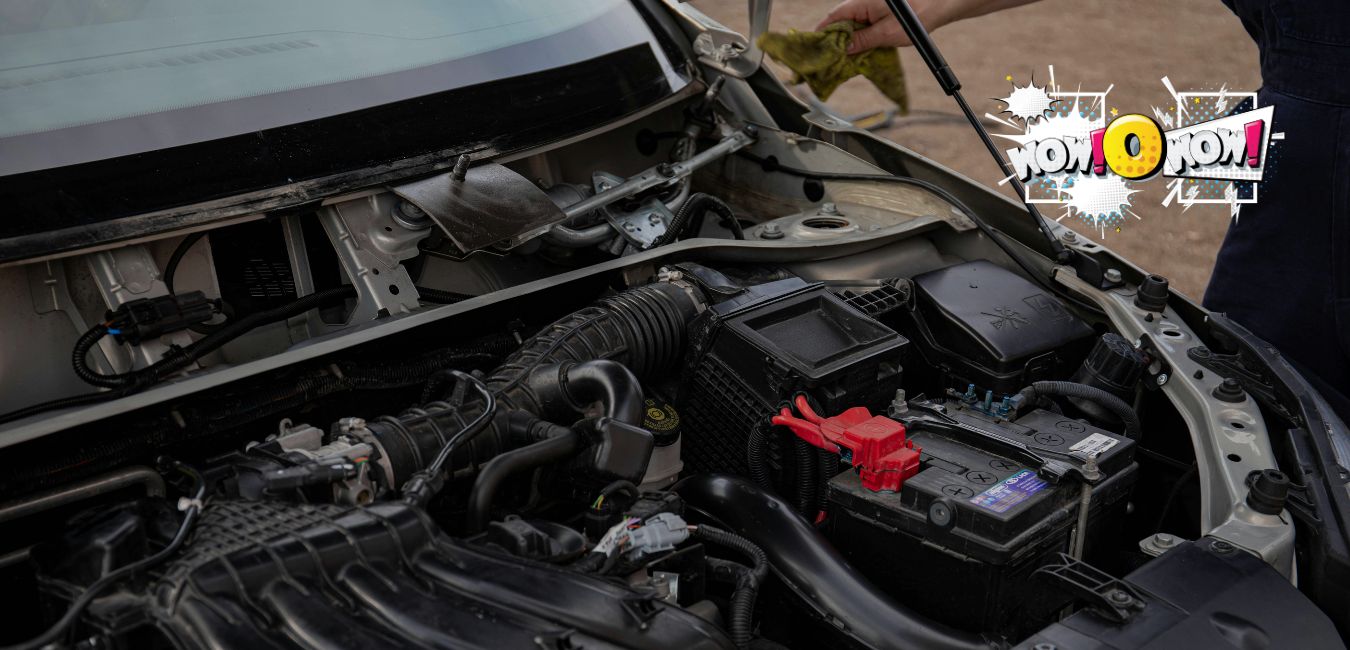
A wet car battery is almost always safe, and it is not going to shock you. A standard car battery runs at about 12 volts DC, which is far too low to push a dangerous current through human skin, wet or dry. The battery case is sealed, and it sits in an engine bay designed to get soaked by rain and road spray.
The hazards that do exist around a battery are chemical, not electrical. Caution: a lead-acid battery contains sulfuric acid and vents flammable hydrogen gas, so wear gloves and eye protection whenever you work on one, and keep sparks and flames away. The danger is a spark or an acid burn, not electrocution.
Can rain or a car wash damage a car battery?
Rain and a normal car wash will not damage a healthy sealed battery. The top of the battery is closed, the terminals are usually shielded by covers, and water simply runs off and drains out of the engine bay. Cars are engineered for this, and driving through a downpour puts far more water under the hood than a car wash ever will.
There is one thing worth avoiding: blasting the battery and its terminals directly with a high-pressure washer. High-pressure water can force its way past seals and vent openings that ordinary rain never reaches, and it can drive grime down into the terminal connections. Rinse the area gently if you’re cleaning under the hood, and keep the pressure wand pointed elsewhere.
What happens if water gets inside the battery?
Water inside the battery is a real problem, because it dilutes the electrolyte, the sulfuric-acid solution the battery needs to hold a charge. A diluted cell produces less voltage and less cranking power, and the battery may never fully recover. This is completely different from the outside of the case getting wet, which is harmless.
How the water got in tells you what to do next. If a sealed, maintenance-free battery has water inside it, the case or a seal is compromised, and the battery should be replaced rather than dried out. Some older serviceable batteries have removable caps and are designed to be topped up. Caution: top those up with distilled water only, never tap water and never acid. Tap water carries minerals that damage the plates. Check your owner’s manual first, because most modern batteries are sealed and must not be opened at all.
Can a wet battery cause a drain or a short?
A wet battery can quietly drain itself, and this is the most common real consequence of a wet battery top. A film of water mixed with dirt, dust, and acid residue conducts electricity. Spread across the top of the case between the positive and negative terminals, it forms a weak bridge, and current leaks slowly from one terminal to the other. The battery discharges while the car just sits there.
Use this matrix to place your own situation:
| Situation | Risk level | What to do |
|---|---|---|
| Rain on a clean, sealed battery | Harmless | Nothing. Drive as normal. |
| Car wash or a gentle rinse | Harmless | Nothing. Avoid high-pressure spray at the terminals. |
| Wet, grimy battery top with corroded terminals | Moderate — slow drain | Dry it, then clean the top and terminals |
| Water inside a sealed battery | Serious — case compromised | Replace the battery |
| Cracked, bulging, or leaking case | Serious — acid hazard | Do not handle it. Have it removed and replaced. |
| Submerged in a flood | Serious | Do not start the car. Get it professionally inspected. |
A grimy, wet battery top is worth cleaning precisely because that bridge is invisible and gradual. If your battery keeps going flat overnight, this can be one contributor, though it is rarely the only one. Here’s the fuller picture on why a car battery drains so fast.
Can a wet car battery electrocute me?
A wet car battery will not electrocute you. A 12-volt DC system does not carry enough voltage to drive a harmful current across human skin, and that stays true when your hands and the battery are both wet. You can touch both terminals of a 12-volt car battery and feel nothing at all.
The real dangers are different, and they deserve respect. Caution: laying a metal tool or a piece of jewelry across both terminals creates a dead short, and a car battery can dump hundreds of amps into that short instantly. The result is a shower of sparks, a tool hot enough to cause a severe burn, and a spark sitting right next to a battery that vents hydrogen. Remove rings and watches, keep tools clear of the terminals, and keep flames away. The hazard is the short circuit, not the water.
What if the battery was submerged in a flood?
A battery submerged in a flood is a different problem entirely, and the correct response is caution, not a jump-start. Do not start the vehicle. Floodwater is dirty, often salty, and corrosive, and it seeps past seals into the battery, the wiring, and every electrical module in the car. Starting a flood-exposed vehicle can turn recoverable damage into permanent damage.
NHTSA advises a thorough assessment of a flood-exposed vehicle before it is started, because serious damage is often invisible, and it warns that flooded vehicles can carry short-circuit and fire risks. AAA is equally direct: never attempt to start a flood-damaged car until a qualified technician has inspected it. Leave the whole job to a professional the moment floodwater is involved.
Caution: hybrid and electric vehicles need extra distance. NHTSA warns that flood-exposed high-voltage batteries can be corrosive and pose a fire risk, and it advises keeping a damaged lithium-ion vehicle well away from your house, other vehicles, and anything combustible. Never attempt to jump-start or work on a flood-exposed EV yourself.
How do I dry and clean a wet battery safely?
Dry and clean a wet battery in six steps. This is a genuine driveway job for most owners, as long as the case is intact.
- Let the engine cool and put on gloves and eye protection. Caution: you are working around sulfuric acid and hydrogen gas. Stop here and call a professional if the case is cracked, bulging, melted, or leaking.
- Disconnect the negative terminal first, then the positive. Negative first means a slipped wrench cannot short the battery through the car’s body.
- Dry the top of the case and the terminals with a clean rag, then let it air-dry fully.
- Clean off corrosion with a baking-soda paste. Baking soda neutralizes acid residue. Scrub the posts and clamps, rinse lightly, and dry completely.
- Apply a thin coat of dielectric grease to the posts to keep moisture and corrosion out.
- Reconnect the positive terminal first, then the negative. That is the reverse of the disconnect order, and for the same reason.
Corrosion comes back if you don’t address why it appeared, so it’s worth understanding what causes corrosion on a car battery. Have a shop handle it if the terminals or cables are damaged rather than simply dirty.
How much does a wet-battery problem cost to fix?
Most wet-battery situations cost nothing at all, which is the honest headline here. You dry it, and you move on. Costs only appear when water actually got inside the battery or into the car’s electrical system. The ranges below vary by vehicle and region, so confirm a local quote.
| Situation | Typical cost (verify) |
|---|---|
| Rain or car wash on a healthy battery | $0 |
| Clean and dry a grimy battery top | $0–$20 DIY |
| Battery replacement (water inside, or a cracked case) | ~$100–$300 (~$150–$400 installed) |
| Flood-exposed vehicle electrical inspection | Varies widely — professional assessment required |
Batteries aren’t cheap, which is why the free fixes matter here. More on why car batteries have gotten so expensive. And while we’re correcting battery myths, here’s another one worth knowing: why you supposedly can’t put a car battery on concrete.
Wet car battery — FAQ
Will my car start if the battery got rained on?
A car will normally start fine after the battery gets rained on, because the battery case is sealed and the engine bay is built to get wet. If it doesn’t start, rain is rarely the actual cause. Look instead at corroded or loose terminals, or a battery that was already near the end of its life.
Can I drive through deep water with my battery under the hood?
Never drive through deep or moving water, and the battery is not the main reason. The bigger risks are water entering the engine’s air intake, which can destroy the engine, and the car being swept away. The National Weather Service warns that just 12 inches of moving water can carry away most cars. Turn around instead.
Is it bad to spray water on my car battery to clean it?
A light rinse will not hurt a sealed car battery, but a high-pressure spray aimed at the terminals or vents is a bad idea, because it can force water past seals that ordinary rain never breaches. Clean the top with a baking-soda paste and a rag instead, then dry it thoroughly.
Does a wet battery drain faster?
A wet battery can drain faster when the top is dirty. A film of water mixed with dust and acid residue conducts electricity across the case, bridging the positive and negative terminals and letting current leak away while the car is parked. Keeping the battery top clean and dry prevents it.
What to do right now
A wet car battery is almost always fine. Dry the top, clean off any corrosion, and get on with your day. Only three situations genuinely matter: water inside the cells, a cracked or leaking case, and flood submersion. Never start a car that has been in a flood, and have it professionally inspected instead. Caution: the hazards to respect around any battery are acid and hydrogen gas, not a 12-volt shock, so wear gloves and eye protection and keep metal tools off the terminals.
Have an ASE-certified technician take over if the case is damaged or floodwater is involved. For everything on keeping your 12-volt system healthy, see our complete car battery guide, part of our car care and troubleshooting hub.
