

At a Glance
| Can a weak battery do it? | Yes, on modern computer-controlled engines |
| How | Unstable voltage upsets the ECU, injectors, and coils |
| Best confirming test | Resting (~12.6V), cranking, and charging voltage |
| Often the real culprit | A failing alternator, or a fuel/ignition fault |
| Before you swap | Load-test the battery — don’t guess |
This guide explains how low voltage upsets combustion control, which symptoms point to an electrical cause rather than fuel or ignition, and the four-test sequence that confirms it before you spend money. Voltage figures below are standard reference values that vary with temperature and vehicle, so confirm against your specs.
Table of Contents
How does a weak battery make an engine run rough?
A weak battery makes an engine run rough by feeding unstable voltage to the systems that control combustion. A modern engine’s computer, its fuel injectors, and its ignition coils are all designed to run on steady voltage. When voltage sags or fluctuates, the ECU can misread its sensors or briefly reset, the injectors deliver a weaker pulse, and the coils produce a weaker spark. The result is upset fuel and spark timing, which the driver feels as a rough idle, hesitation, or a misfire.
Low voltage can also mask a failing alternator, and that matters for the diagnosis. The alternator is what actually holds voltage steady once the engine is running, so unstable voltage often traces back to the charging system rather than the battery alone. That’s why testing beats guessing here.
What symptoms point to a weak battery, not fuel or ignition?
A battery or charging problem usually announces itself with electrical quirks that a pure fuel or ignition fault does not. Look for these tells appearing alongside the rough running:
- A rough or fluctuating idle that smooths out as the engine revs higher
- Slow or lazy cranking when you start the car
- Headlights and dashboard lights that dim or flicker
- Random, intermittent warning lights that come and go
- Electronics that glitch or reset, such as the radio, clock, or infotainment
- A Battery Saver Active or similar power-saving message
Two or more of these together point to the electrical system rather than a clogged injector or a worn spark plug. A rough idle with no electrical quirks at all is more likely a fuel, vacuum, or ignition issue, and swapping the battery won’t touch it.
How do I confirm the battery is causing rough running?
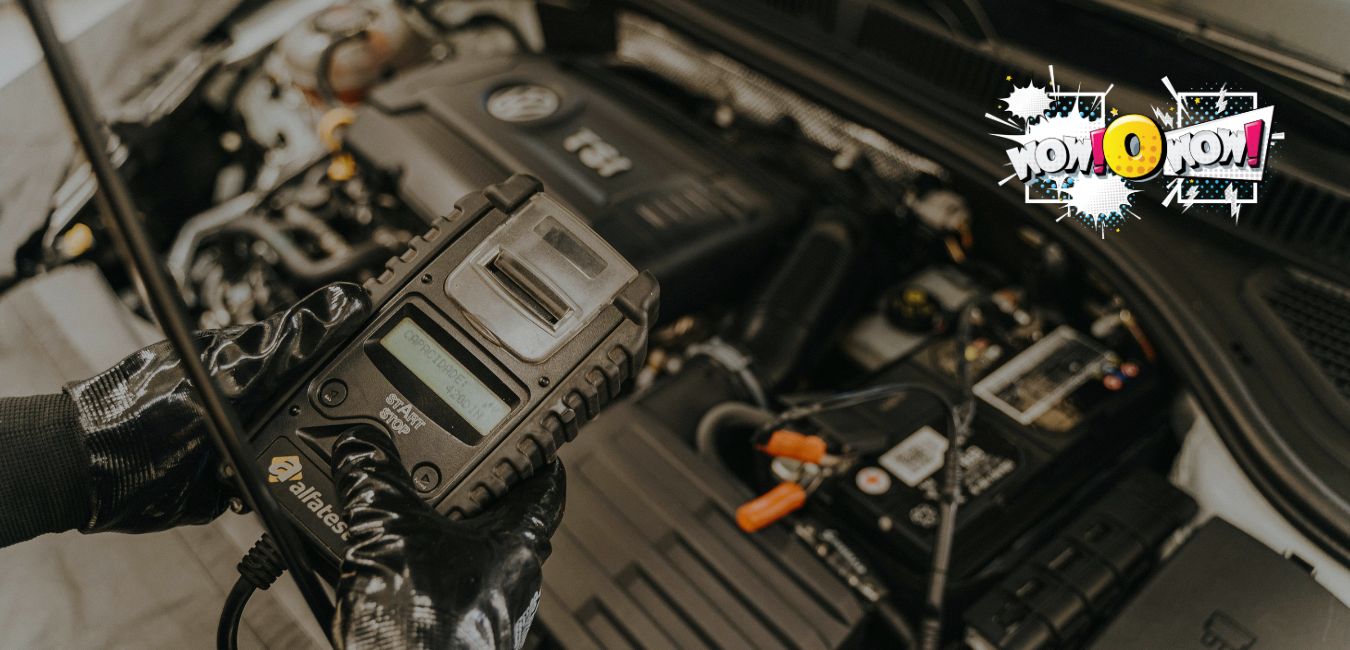
Confirm the battery with four quick voltage tests before replacing any parts. Each one isolates a different part of the electrical system, and together they tell you whether to look at the battery, the alternator, or somewhere else entirely.
Caution: a battery vents flammable hydrogen gas, so keep sparks and flames away and wear eye protection.
- Resting voltage, engine off: a healthy battery reads about 12.6 volts. Below about 12.4 volts means it’s low or discharged.
- Cranking voltage, while starting: the battery should hold above about 9.6 volts as it cranks, at a moderate temperature. A big drop below that points to a weak battery.
- Charging voltage, engine running: a healthy charging system reads about 13.5–14.7 volts. A reading outside that range points to the alternator, not the battery.
- Scan for codes with an OBD-II scanner: a P0300 random-misfire code often appears with a voltage problem, and it may clear once voltage is stable.
You can follow the full procedure in our guide on how to test a car battery with a multimeter. If all four tests look normal, the rough running is almost certainly not electrical, and the battery is not the part to replace.
Most common battery-related causes of rough running
Four electrical faults cause most battery-related rough running, ranked here most to least likely: a genuinely weak battery, corroded or loose connections, a failing alternator, and a parasitic drain. Each one disrupts the steady voltage the engine needs to run smoothly.
| Cause | How to confirm | Typical fix & cost (verify) |
|---|---|---|
| Weak or aging battery | Resting below ~12.4V; fails a load test; big cranking drop | Replace ~$100–$300 |
| Corroded or loose terminals / ground | Visible buildup or a loose clamp | Clean and tighten — often DIY |
| Failing alternator | Charging voltage outside ~13.5–14.7V running | Replace ~$400–$1,000 installed |
| Parasitic drain | Key-off current draw above ~50 mA | Diagnosis ~$100+ |
Cleaning terminals is a safe driveway job for most owners. Leave alternator replacement to a professional, since it means working around a spinning belt and the charging system.
Caution: keep your hands and tools clear of the belt and a hot engine. A weak charging system can also make the engine stall, so it’s worth knowing whether a bad battery or alternator is what’s stalling the car, and a genuine charging failure can even leave you stranded mid-drive.
Can a weak battery cause rough running — FAQ
Can a bad battery cause a misfire?
A bad battery can cause a misfire on a modern car. Low voltage weakens the spark from the ignition coils, which can trigger a random misfire code such as P0300. The misfire often clears once voltage is stable again. Have the battery load-tested to confirm before you replace coils or spark plugs.
Can low battery voltage cause a rough idle?
Low battery voltage can cause a rough idle, because idle is when the charging system is under the most strain and voltage sags most easily. A resting voltage below about 12.4 volts, paired with a rough idle that smooths out as the revs rise, points toward the battery or charging system rather than fuel.
Will a new battery fix rough running?
A new battery fixes rough running only when a weak battery is the actual cause, so test before you swap. Rough running has many causes, including worn spark plugs, dirty injectors, vacuum leaks, and a failing alternator. Load-test the battery and check charging voltage first, and watch for the signs of a dying battery.
Is it the battery or the alternator?
The battery and the alternator are told apart by two numbers. A resting voltage below about 12.4 volts points to the battery. A charging voltage outside about 13.5 to 14.7 volts with the engine running points to the alternator. If the car runs rough and then dies soon after, suspect the alternator, because it powers the car once the engine is running.
What to do right now
A weak battery can make a modern car run rough, but confirm it before spending money, because a failing alternator and ordinary fuel or ignition faults cause the same symptoms. Run the four voltage tests first: resting (about 12.6V), cranking (above about 9.6V), and charging (about 13.5–14.7V), then scan for codes. Load-test the battery rather than swapping it on a hunch.
Caution: if rough running turns into stalling while you’re moving, get the car fully off the road and switch on your hazards, as NHTSA advises for any breakdown, before you start diagnosing. AAA notes that most batteries last 3–5 years and are worth testing after the third year. Have an ASE-certified technician take over if the charging voltage is off or the rough running continues with a healthy battery. For everything on your 12-volt system, see our complete car battery guide, part of our car care and troubleshooting hub.
