

| What you’re smelling | Hydrogen sulfide, made from the sulfur naturally in fuel |
| #1 cause | A failing or overwhelmed catalytic converter |
| #2 cause | A rich fuel mixture, from a sensor, injector or regulator fault |
| The first check | Where and when you smell it, which decides the whole diagnosis |
| Not this page | Smell near the battery while parked is a different problem |
| Safe to drive? | Short term yes. Stop for overheating, power loss or cabin fumes |
Sulfur is already in your fuel before anything goes wrong. The EPA notes that sulfur is a natural component of crude oil and is present in gasoline unless removed. A healthy exhaust system deals with it silently, which is why you have never smelled it before.
So the smell is not really about sulfur arriving. It is about something no longer handling the sulfur that was always there. This page covers where that goes wrong, but first it covers the question that decides which page you should even be reading. For the full odor index, see the complete car smells guide.
Catalytic converter replacement is one of the more expensive repairs on a car and the price varies enormously by vehicle, so no dollar figures appear on this page. Costs below are given as relative bands and you should get a quote for your own car. Diagnosis of fuel-mixture faults needs a code scan rather than guesswork.
Table of Contents
Rotten eggs while driving, or rotten eggs from the battery?
Where and when you smell it decides which problem you have, and the two have nothing in common except the smell. A sulfur smell from the tailpipe while driving is an exhaust and fuel-system issue. A sulfur smell around the hood while parked or after charging is a battery venting hydrogen sulfide, which is a different fault with different urgency and a different fix.
| Exhaust case (this page) | Battery case | |
|---|---|---|
| Where | From the tailpipe, or drawn into the cabin from behind | Around the hood, strongest right over the battery |
| When | While driving, often worse under acceleration | Parked, idling, just after driving, or while charging |
| What it means | Failing catalytic converter or a rich fuel mixture | An overcharging or failing battery boiling its acid |
Go to the battery page if your description matches the right-hand column, because nothing below will help you. That case has its own hazards, including a do-not-jump-start warning, and it is covered in why a car battery smells like rotten eggs. Everything from here on is the exhaust case.
Most common causes, ranked
Four things cause a sulfur smell from the exhaust, and the first two are far more likely than the rest. They are also connected: the fuel-side faults in row two are a common reason the converter in row one fails in the first place, which is why fixing the cheap one first often saves the expensive one.
| Cause | How to confirm it | The fix |
|---|---|---|
| Failing catalytic converter (most common) | Smell persists across fill-ups, usually with a check engine light, weaker acceleration and worse fuel economy | Shop diagnosis, then converter replacement |
| A rich fuel mixture | A code scan shows fuel-trim or oxygen-sensor faults. Smell is worst under acceleration, sometimes with black exhaust | Fix the sensor, injector or regulator causing it |
| A bad tank of fuel | Smell started right after one specific fill-up and fades as the tank empties | Burn through it and refill elsewhere |
| Fluid burning in combustion | Blue or white smoke alongside the smell, and oil or coolant disappearing | Shop diagnosis of the underlying leak |
The bad-fuel explanation is less likely than the internet suggests. EPA’s Tier 3 program lowered gasoline sulfur to a maximum of 10 parts per million from 2017, so a fill-up sulfurous enough to smell is now uncommon and, more importantly, temporary. A rotten-egg smell that survives two or three tank refills is not the fuel.
The catalytic converter: the usual cause
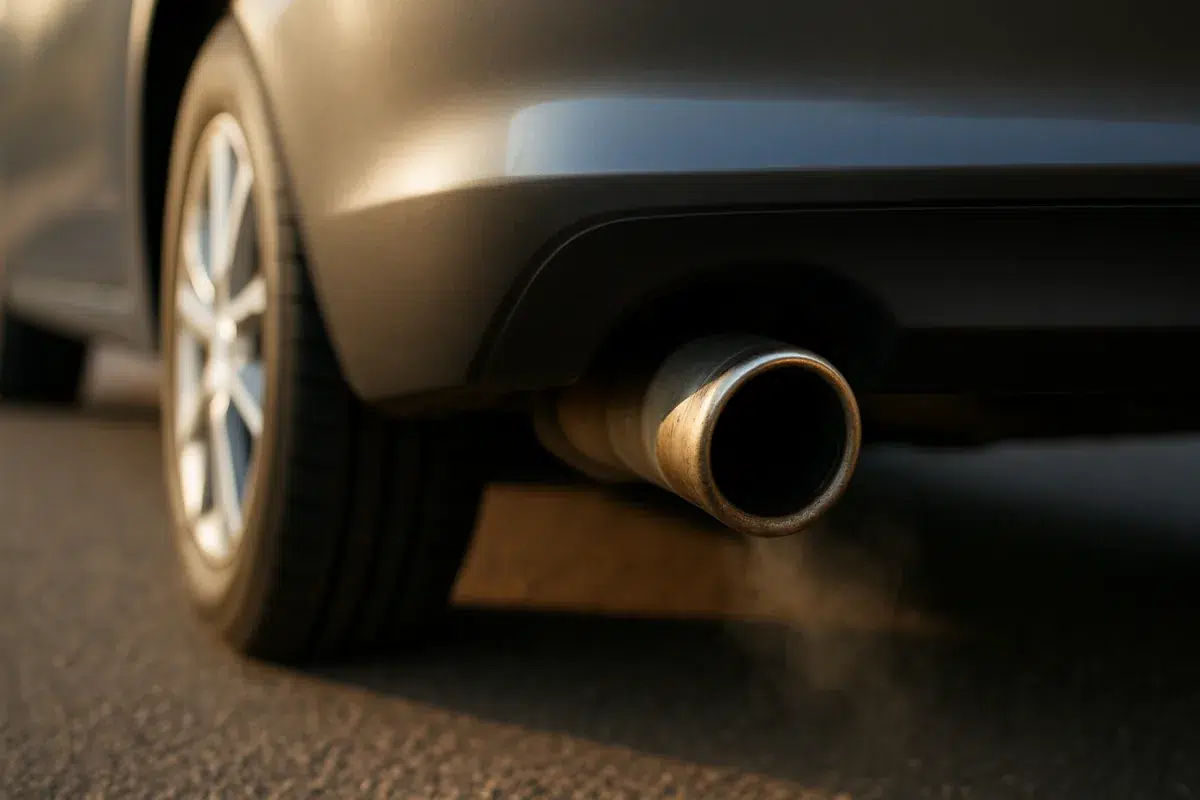
The catalytic converter is the usual culprit because processing sulfur is part of its job. It converts the sulfur compounds in exhaust into odorless ones along with everything else it cleans up, and when its catalyst degrades or clogs, some of that sulfur leaves as hydrogen sulfide instead. That gas is what your nose is picking up.
A failing converter rarely arrives alone. Expect a check engine light, noticeably weaker acceleration, worse fuel economy, and sometimes a rattling sound from underneath as the internal honeycomb breaks apart. The smell on its own with none of those is more likely to be a fuel-mixture problem than a dead converter.
Caution: a badly clogged converter traps heat and can run hot enough to glow or to scorch what is underneath the car. Stop driving and let it cool if you notice a burning smell alongside the sulfur, if the car is losing power badly, or if the temperature gauge is climbing. The overheating side of that is covered in why a car overheats, and smoke without overheating in why a car smokes but is not overheating.
Have the fuel side diagnosed before agreeing to a converter. Replacing one while the fault that killed it is still present buys you a second dead converter, and any competent shop will check fuel trims and oxygen sensor data first.
A rich fuel mixture: what overwhelms the converter
A rich mixture means the engine is burning more fuel than it should for the air available, and it produces more sulfur compounds than even a healthy converter can process. This is the cause worth finding, because it explains the smell on a car whose converter is fine and it destroys converters on cars where nobody looks for it.
Three faults cause it most often. A failing oxygen sensor reports the wrong mixture, so the engine keeps adding fuel it does not need. A leaking fuel injector dribbles extra fuel into a cylinder. A faulty fuel-pressure regulator sends fuel in at the wrong pressure. All three usually set codes, which is why a scan is the sensible first spend rather than the last.
A misfire belongs in the same conversation. Raw unburned fuel dumped into the exhaust is the fastest way to overheat and destroy a converter, which is why a flashing check engine light is treated as urgent rather than routine, as covered in a flashing check engine light with the car shaking.
Leave the diagnosis to a shop. Fuel-system work involves pressurized fuel lines, and telling a genuinely failed oxygen sensor apart from one reporting a real problem elsewhere takes live data rather than a parts swap. Guessing here is how people spend money twice.
Is it safe to drive, and what does it cost?
Driving for a short period is usually acceptable while you arrange a diagnosis, because the smell itself is a symptom rather than a hazard at tailpipe concentrations. Hydrogen sulfide is noticeable long before it is dangerous outdoors. New York State’s health department notes that hydrogen sulfide is a colorless gas with a rotten egg odor that can be smelled at very low concentrations in air, which is exactly why a trace in your exhaust is so obvious.
The real risk is exhaust reaching the cabin rather than the sulfur in it. If the smell is strong inside the car rather than noticeable outside it, exhaust is getting in, and exhaust carries carbon monoxide. The CDC describes CO as an odorless, colorless gas that kills without warning, with flu-like symptoms including headache, dizziness and confusion. Drive with windows open and get it looked at promptly if that is your situation.
Caution: stop driving if the car overheats, loses power badly, or the sulfur smell is accompanied by a burning smell or a strong exhaust smell inside the cabin. Those move this from a booking to a today problem.
| Cause | Relative cost | Why |
|---|---|---|
| A bad tank of fuel | Lowest, effectively free | Burn through it and refill somewhere else |
| Oxygen sensor | Low to moderate | A common part, usually reachable, plus diagnostic time |
| Fuel injector or pressure regulator | Moderate | Parts plus meaningful labor and diagnosis |
| Catalytic converter | Highest by a wide margin | Precious-metal emissions part, and the fuel fault should be fixed first |
Frequently asked questions
Why does my car smell like rotten eggs when I accelerate?
Accelerating loads the engine and pushes more fuel through it, so a failing catalytic converter or a rich fuel mixture produces more hydrogen sulfide and a stronger sulfur smell. A smell that appears mainly under acceleration points at the fuel mixture. A code scan usually identifies which sensor or component is responsible.
Is it safe to drive with a rotten egg smell?
Driving briefly is usually safe while you arrange a diagnosis, since the smell itself is not dangerous at tailpipe concentrations outdoors. Stop driving if the car overheats, loses power badly, or the smell is strong inside the cabin, because exhaust entering the cabin carries carbon monoxide.
Can bad gas cause a rotten egg smell?
A single tank of higher-sulfur fuel can cause a temporary rotten-egg smell that fades as you burn through it. US gasoline sulfur has been capped at very low levels since 2017, though, so this is uncommon. A smell that survives two or three refills is the converter or the fuel system instead.
How much does it cost to fix a rotten egg smell?
Costs range enormously depending on the cause, from effectively nothing for a bad tank of fuel, through a moderate bill for an oxygen sensor, up to a catalytic converter as the most expensive outcome by a wide margin. A diagnostic scan tells you which end you are facing before you commit.
What to do now
Confirm where and when you smell it first, because a sulfur smell around the hood while parked is a battery problem rather than anything on this page. If it comes from the exhaust while driving, note whether there is a check engine light and get the codes scanned, since that separates a cheap fuel-side fault from an expensive converter. Rule out a bad tank by burning through it and refilling elsewhere. Fix the fuel-mixture cause before replacing a converter, or the new one will fail the same way. Safe to drive: short term yes, but stop for overheating, serious power loss, or a strong exhaust smell inside the cabin.
For the full odor index, see the complete car smells guide, or browse the wider automotive care and repair section.
