

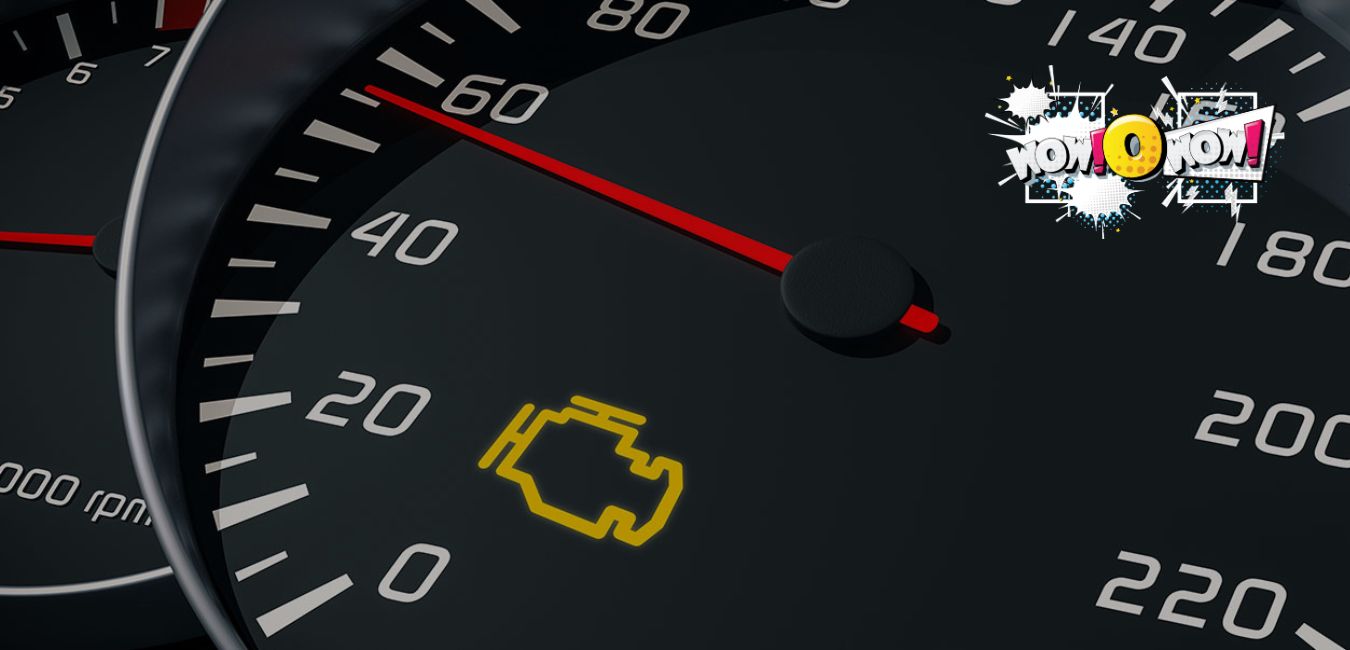
| What it means | An active engine misfire, happening as you drive |
| Safe to drive? | No. Pull over when safe; do not keep driving. |
| #1 cause | Worn spark plugs or a failed ignition coil |
| Biggest risk | Catalytic converter damage, then engine damage |
| Fast confirm | An OBD-II scan showing a misfire code such as P0300 |
| DIY or shop? | Shop. Scan it yourself, then hand the repair over |
A steady check engine light is a message. A flashing one is an alarm, and the shaking tells you what the alarm is about. This guide explains why the two happen together, what the flashing pattern is telling you that a steady light does not, which causes to expect in order of likelihood, and roughly what each repair involves.
Repair costs vary widely by vehicle, engine, and region, so the cost section gives relative bands rather than flat prices. Get a local quote once the fault code is known, and check your owner’s manual for anything specific to your car.
Table of Contents
Why is my check engine light flashing while the car shakes?
A flashing check engine light with shaking means one or more cylinders are misfiring. The engine runs unevenly because a cylinder is not contributing power, which you feel as shaking at idle or under acceleration. The fuel that did not burn leaves through the exhaust instead, and that is the part your car is warning you about.
The flashing pattern is deliberate. A steady light flags a stored fault that needs attention soon, while a flash signals a fault serious enough to damage the emissions system right now. Federal rules require every modern car to run onboard diagnostics that watch for engine misfire and alert the driver, under 40 CFR 86.1806-17. If the light flashes and then goes back to steady, the misfire has eased but the fault is still there. For the wider set of warning symbols and what each one means, see our complete guide to dashboard lights.
Is it safe to drive with a flashing check engine light?
Driving with a flashing check engine light is not safe for the car. Unburned fuel reaching the catalytic converter makes it overheat, and the converter can be ruined in a short distance. A misfiring engine can also lose power without warning while you are in traffic. Pull over as soon as you can do so safely, and do not continue the trip.
The converter is what makes this urgent rather than merely annoying. The EPA calls the catalytic converter the most important pollution control device on a vehicle, notes that the original one is designed to last the life of a properly tuned car, and warns that running an engine that is not properly tuned can ruin the converter and cause engine damage. Replacing a converter costs far more than replacing spark plugs, which is the whole argument for stopping now.
Caution: the exhaust and engine get extremely hot during a misfire, so give them time to cool before opening the hood, and park away from dry grass or leaves.
What should I do the moment the light starts flashing?
Reduce what you are asking of the engine, then stop. Heavy acceleration, towing, and high speeds make a misfire worse and send more raw fuel into the exhaust. There are 5 steps worth taking in order, and the first three matter most. Getting the car off the road quickly is what limits the damage.
- Ease off the accelerator and avoid hard acceleration, high revs, or towing.
- Pull over somewhere safe and switch the engine off.
- Arrange a tow, or a scan on the spot, rather than driving further.
- Read the fault code with an OBD-II scanner if you have one, and write down the exact code.
- Give the shop the code and the symptoms, including when the shaking started.
Reading the code is the one part of this you can safely do yourself. The repair is a different matter: misfire work involves the ignition and fuel systems on a hot engine, so leave it to a mechanic. It is fair to ask whether the technician holds ASE certification in engine performance.
What are the most common causes of a misfire?
Four causes account for most misfires, and they are listed below from most to least common. Ignition faults lead by a wide margin, because spark plugs and coils wear out on a schedule while injectors and compression problems do not. The table pairs each cause with how a shop confirms it and what the repair usually involves.
| Cause | How it is confirmed | Usual fix | Relative cost |
|---|---|---|---|
| Worn spark plugs | Misfire code plus plugs inspected for wear or fouling | Replace the plugs, usually as a set | Lowest |
| Failed ignition coil | Cylinder-specific code such as P0301; the fault follows the coil when swapped | Replace the failed coil | Low to moderate |
| Clogged or failed fuel injector | Cylinder-specific misfire with normal spark and compression | Clean or replace the injector | Moderate |
| Vacuum leak | Lean codes, rough idle, sometimes a hiss; confirmed with a smoke test | Replace the leaking hose or gasket | Low to moderate |
| Low compression from worn valves or rings | Compression or leak-down test on the affected cylinder | Internal engine repair | Highest |
Worn spark plugs or a failed ignition coil
Ignition faults are the first thing to check, because a worn plug or a dead coil stops a cylinder firing outright. A scan usually shows P0300 for a random misfire across cylinders, or P0301 through P0308 for a specific cylinder, and the number after the 030 is the cylinder that is failing. Plugs wear gradually, while a coil tends to fail suddenly.
Replacement is the fix in both cases, and plugs are normally done as a full set rather than one at a time. Leave it to a mechanic if the coils sit under an intake manifold, if the plugs are buried deep in the cylinder head, or if you are not comfortable working around ignition voltage and a hot engine. Worn plugs also cause the rough running covered in our guide to why a car shakes when idling, which is the milder version of the same problem.
Injector, vacuum leak, or low compression
If the ignition parts check out, the fault is in fuel or air delivery, or in the cylinder itself. A clogged injector starves one cylinder of fuel. A vacuum leak lets unmetered air in and leans the mixture, which often shows up as a rough idle that smooths out at speed. Low compression from worn valves or piston rings is the serious end of the list.
Each of these is a shop diagnosis rather than a driveway one. Injectors are tested with the engine running and the fuel system pressurized, vacuum leaks are found with a smoke machine, and compression is measured cylinder by cylinder with a gauge. A misfire that comes with white exhaust smoke points at coolant entering a cylinder, which our guide to white smoke from the exhaust covers in detail. Watch the other warning lights too: if the oil pressure light comes on alongside the misfire, shut the engine off immediately.
How much does it cost to fix a misfire?
The cost of fixing a misfire depends entirely on which cause you have, and the range is wide. Spark plugs sit at the cheap end, coils and injectors in the middle, and internal engine work at the top. Prices vary by engine layout and region, so treat the bands below as a shape rather than a quote, and get the code read before anyone orders parts.
| Repair | Relative cost | Note |
|---|---|---|
| Spark plugs | Lowest | Usually replaced as a set; labor rises if they are hard to reach |
| Ignition coil | Low to moderate | Often one coil, though shops may suggest doing the set on high-mileage engines |
| Fuel injector cleaning or replacement | Moderate | Cleaning first, replacement if it fails a flow test |
| Vacuum leak repair | Low to moderate | Depends on whether it is a hose or an intake gasket |
| Compression or valve work | Highest | Internal engine repair; can approach the value of an older car |
| Catalytic converter replacement | High | The avoidable one, added only if the misfire was driven on |
That last row is the reason this page leads with the stop-driving verdict. A misfire caught early is usually a plug or coil job. The same misfire driven on for a week can turn into a plug job plus a converter, and converter prices dwarf the ignition parts that caused the problem.
Frequently asked questions
Can I drive with a flashing check engine light and shaking?
Driving with a flashing check engine light is not advisable, because the light signals an active misfire that can destroy the catalytic converter and eventually damage the engine. Pull over as soon as it is safe, switch off, and arrange a scan or a tow rather than finishing the trip.
What does a flashing check engine light mean?
A flashing check engine light means a fault is happening right now that can damage the emissions system, almost always an engine misfire. A steady light flags a stored fault that needs attention soon. The flash is the car asking you to stop rather than to book an appointment.
Will a misfire damage my engine?
A sustained misfire damages the catalytic converter first, because unburned fuel overheats it. Over time the extra fuel and heat can harm the engine itself, including washed-down cylinder walls and damaged valves. Fixing the misfire early, usually plugs or a coil, prevents the expensive downstream damage.
How long can I drive with a misfire?
With a flashing light, the answer is no further than somewhere safe to stop, because converter damage starts quickly. A steady light with mild roughness is less urgent but still needs prompt diagnosis, since a misfire that is tolerated usually gets worse rather than better.
What to do now
Treat the flash as the emergency it is. Ease off the accelerator, pull over as soon as it is safe, and have the car scanned or towed instead of driving on, because every mile with an active misfire risks the catalytic converter. Get the fault code read, expect spark plugs or an ignition coil, and have the repair done by a mechanic.
For what the other warning symbols mean and which ones mean stop, see our dashboard lights and car terms guide. More maintenance and troubleshooting help lives on the wowowow car care home page.
