

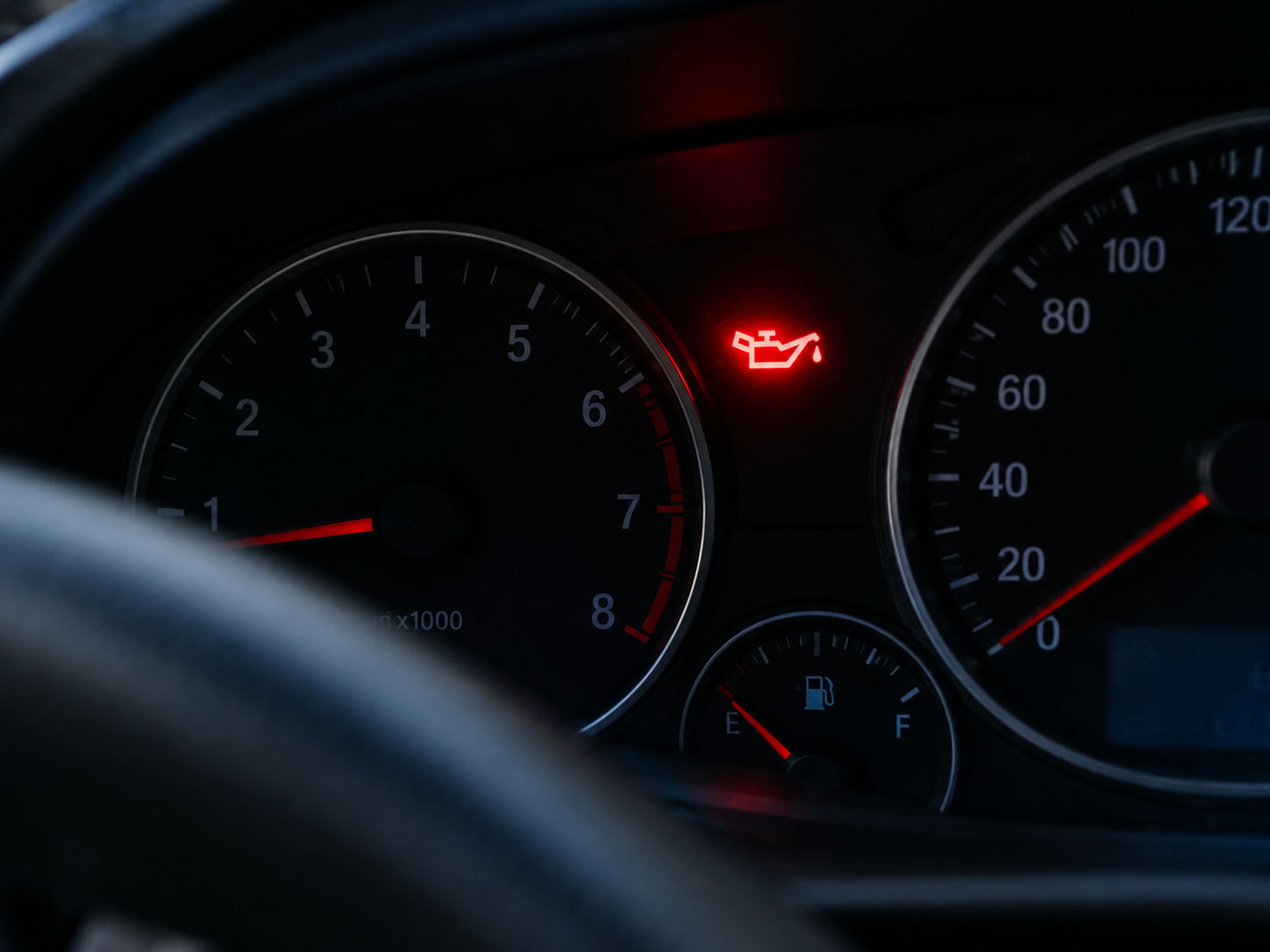
| What it means | The red oil-can symbol warns of low oil pressure, not low oil level |
| Is it urgent? | Yes. Stop the engine as soon as you can do so safely |
| What to do | Pull over, engine off, let it settle, check the dipstick, top up if low |
| If the level is fine | Do not drive it. Have it towed and diagnosed |
| The other oil light | An oil-change or oil-life message is a service reminder, not an emergency |
| Most common cause | A low oil level, from a leak or from oil consumption |
Drivers use “oil light” for three different warnings, and they carry completely different urgency. One of them means stop the engine now. The others mean book a service or top up soon. Identifying which one is lit is the whole job, so that comes first.
Oil capacities, grades, and repair costs vary by engine. Check your owner’s manual for your vehicle’s specifics and get a local quote before acting on any cost figure here.
Table of Contents
Which oil light is it? The three lights
The red oil-can symbol warns that oil pressure has dropped, and it is the urgent one. An oil-change or oil-life message is a maintenance reminder with no urgency at all. Some cars also have a separate low-oil-level indicator, which means top up soon. Identifying which is showing sets everything that follows.
| What you see | What it means | Urgency |
|---|---|---|
| Red oil-can symbol, sometimes with a drip | Low oil pressure. The pump may not be circulating oil | Stop the engine as soon as it is safe |
| “Oil change due”, “Service”, or an oil-life percentage | A scheduled maintenance reminder | Not urgent. Book a service |
| A low-oil-level indicator or dashboard message | The oil in the pan has dropped below the sensor | Check and top up soon |
| Amber oil-can symbol (some vehicles) | Usually a level or sensor warning rather than pressure loss | Check the manual and the level promptly |
The distinction that matters most is pressure versus level. Oil level is how much oil is sitting in the pan. Oil pressure is whether the pump is pushing that oil through the engine with enough force to keep a film between moving parts. You can have a full pan and still lose pressure if the pump or a passage fails, and you can lose pressure simply because the level dropped too far. The red light reports the second thing, which is why it outranks everything else on the dashboard except a temperature warning.
If what you are looking at is a percentage counting down, that is the reminder rather than the warning, and our guide to what the oil life percentage means explains what that number is actually measuring. For every other symbol on the cluster, see our complete dashboard lights and car terms guide.
What to do when the red oil light comes on
Pull over and shut the engine off promptly, then check the oil once it has settled. The sequence below is deliberately short, because the time between the light appearing and real damage starting is measured in minutes rather than miles. Do not finish your journey first, and do not try to nurse it home.
- Pull over safely and turn the engine off. Signal, get out of traffic, and switch off. Every extra minute of running with no oil pressure adds wear you cannot undo.
- Wait a few minutes, then check the dipstick. Let the oil drain back to the pan so the reading is honest, and park on level ground if you can. The full routine is in how to check your engine oil level.
- Top up if the level is low. Add the grade your manual specifies, a little at a time, rechecking until it reaches but does not pass the full mark.
- Restart and watch the light. If it goes out and stays out, drive gently and get the cause of the oil loss found, because the oil went somewhere.
- If the light stays on, stop. Switch the engine off and have the car towed. A normal oil level with the light still lit means the pressure loss is real or the sensor has failed, and neither is safe to drive on.
Caution: the engine and the oil will be hot. Let things cool before you open the filler cap or handle the dipstick tube, and keep your hands clear of the belts and fan, which can move without warning on some vehicles.
That last step is the one people get wrong. A light that stays on with a full sump feels like a false alarm, and it is tempting to assume a faulty sensor and keep driving. The problem is that you cannot tell a bad sensor from a failing oil pump from the driver’s seat, and the two look identical until the engine seizes. Treat it as real pressure loss until a mechanic proves otherwise. If the engine has already been cutting out, that escalates things further, and whether low oil can make a car shut off covers what that combination means.
Why the red oil light comes on
Five causes cover almost every case, and a low oil level is by far the most common. The rest are pressure faults inside the engine, which is why the light is treated as serious even when the dipstick reads normal. Only the first one is something an owner can fix at the roadside.
| Cause | How to confirm | Fix |
|---|---|---|
| Low oil level, from a leak or consumption | Dipstick reads below the low mark | Top up, then find where the oil is going |
| A failing oil pump | Normal level, light stays on, often with engine noise | Shop job. Do not drive it |
| A faulty oil-pressure sensor or sender | Normal level and no noise, but the light persists | Shop diagnosis, then sensor replacement |
| A clogged oil filter or blocked passages | Long-overdue oil changes, sludge on the dipstick or filler cap | Shop job. Oil and filter service at minimum |
| Wrong or too-thin oil | The grade in the engine does not match the manual | Correct the grade, and have it checked if the light appeared |
The sensor case deserves a word, because it is where drivers talk themselves into a bad decision. A failed sensor is genuinely common and genuinely harmless, but so is the assumption that it must be the sensor. Have a shop put a mechanical gauge on the engine, which reads actual pressure independently of the car’s own sender, and settle it in one test rather than gambling an engine on a guess. Leave the pump, the passages, and the sensor to a professional in every case, and use a technician you can verify through ASE certification rather than whoever can take the car soonest.
Two of these causes route somewhere more specific. If the level keeps dropping with no puddle on the driveway, the diagnosis is in why a car loses oil with no leak or smoke. If the wrong grade went in at the last service, see what happens if you put the wrong oil in a car, since viscosity that is too thin for the engine can genuinely lower running pressure. Matching the grade and specification in your manual is not optional, and the American Petroleum Institute’s oil categories are the standard behind the markings on the bottle.
Is it ever safe to keep driving?
The red oil-pressure light is never safe to drive on, because the risk is an engine that seizes rather than a repair that gets more expensive. An oil-change reminder is the opposite: it is safe to keep driving and just means book the service. That gap between the two is exactly why identifying the symbol matters more than anything else on this page.
The mechanism explains the urgency. Oil does not only lubricate, it also carries heat away from the hottest parts of the engine and keeps a film between metal surfaces that are moving against each other at speed. Remove the pressure that maintains that film and the bearings, camshaft, and piston rings run metal on metal. Damage starts immediately, and severe damage follows quickly, which is why the advice is to stop the engine rather than to drive to the nearest garage.
A related warning worth knowing: if you hear a ticking or tapping that arrives with or just before the light, that noise is often the valvetrain running short of oil, and it is a reason to stop sooner rather than to turn the radio up. Our guide to an engine ticking noise covers what that sound means. It is also worth checking whether your vehicle has an open safety recall covering the oil pump or oil-pressure system, because the repair is free if it does: search your VIN on NHTSA’s recall lookup.
Frequently asked questions
Can I drive with the oil light on?
Not the red oil-pressure light. Pull over and stop the engine, because low oil pressure can seize an engine within minutes. An oil-change or oil-life reminder is a different warning entirely and only means the oil is due for service, so you can keep driving normally with that one.
The oil light came on but the oil level is fine. Why?
A red light with a normal oil level means the oil pressure is genuinely low or the pressure sensor has failed, and you cannot tell which from the driver’s seat. A failing oil pump or a blocked passage cannot be ruled out, so do not drive it. Have the car towed and diagnosed.
What is the difference between the oil light and the oil change light?
The red oil-can light warns that oil pressure has dropped and means stop the engine now. An oil-change or oil-life message is a scheduled maintenance reminder with no urgency attached. Same subject, completely different consequences, so check which symbol is actually showing before you decide anything.
How long can an engine run with low oil pressure?
Not long. With genuinely low oil pressure, an engine can suffer serious damage or seize within minutes, because the moving parts are no longer separated by a film of oil and begin running metal on metal. That is why the red oil light means switch the engine off rather than drive on carefully.
What to do now
Identify the symbol first. If it is the red oil can, pull over, shut the engine off, let it settle, and check the dipstick. Top up if the level is low and watch whether the light clears. If the level is normal and the light stays on, do not drive the car.
Have it towed rather than driven, because a red oil-pressure light with a full sump is the exact situation that ends in a seized engine. If what you are seeing is an oil-change reminder instead, nothing here is urgent and you simply need a service. For intervals, grades, leaks, and costs in full, see our complete engine oil guide, and for everything on keeping your car healthy, our complete automotive care hub.
