

At a Glance
| Can you use one? | Yes, any compressor that reaches your target pressure works |
| The one real risk | Over-inflating, because compressors fill fast |
| Target pressure | The cold PSI on the driver’s door placard, not the sidewall maximum |
| The method | Fill in short bursts, check with a gauge, bleed down if over |
| Portable vs tank | Portable travels with you; a tank fills faster |
| Check when | Cold, before driving or after parking a few hours |
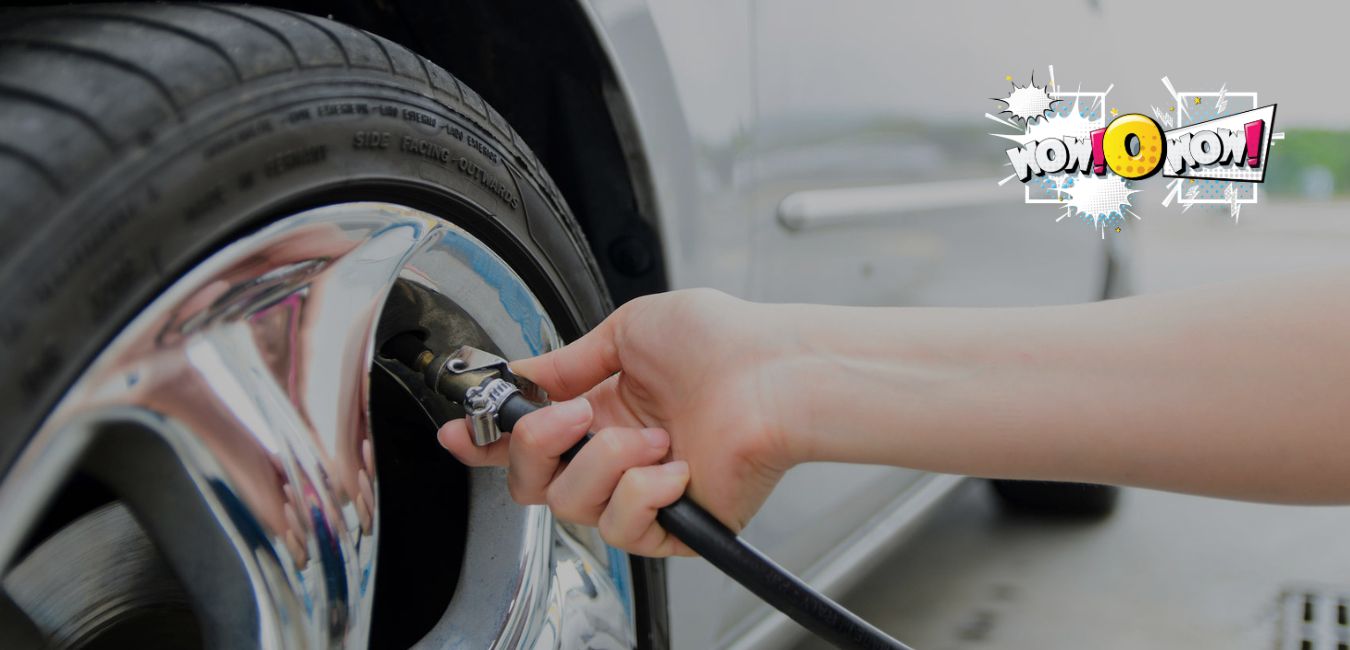
An air compressor is the fastest and easiest way to keep your tires at the right pressure, and unlike a hand or bike pump it takes almost no effort. The trade-off is that the speed cuts both ways: because it fills so quickly, the main skill is stopping at the right number instead of blowing straight past it.
The correct pressure is specific to your vehicle. Per NHTSA, use the cold PSI on your driver’s door-jamb placard or in the owner’s manual, not a general number, and not the maximum figure on the tire sidewall.
Table of Contents
What kind of air compressor do I need?
Any air compressor that can reach your tire’s target pressure will inflate a car tire, so the choice is about convenience and speed rather than whether it works at all. A portable 12-volt inflator that runs off the car’s power socket is compact and travels with you for roadside top-ups. A tank or pancake compressor fills much faster and suits doing all four tires at home. What actually matters is that the unit reaches your target pressure comfortably and has a proper tire chuck that seals on the valve.
| Type | Speed | Best for |
|---|---|---|
| Portable 12-volt inflator | Slower | Roadside top-ups and travelling in the car |
| Tank or pancake compressor | Faster | Doing all four tires at home |
| Large shop compressor | Fastest | Home garage use, with a regulator to control the fast fill |
The connector matters as much as the compressor. Car tires use a Schrader valve, so you need a chuck or clip-on connector that fits it and seals without hissing. A built-in gauge is handy, but treat it as a rough guide rather than gospel, because compressor gauges are often not the most accurate. Keep a separate tire gauge for the final check.
How to inflate a car tire with a compressor
Inflating a car tire with a compressor takes about a minute per tire once you have the target pressure, and the whole method is built around not overshooting it. Work through these steps, and add air in short bursts rather than one long blast.
- Find your target pressure. Read the cold PSI on the sticker inside the driver’s door jamb, or in the owner’s manual. Do not use the maximum pressure molded on the tire sidewall, which is a different, higher number. Our guide to correct tire pressure for your car shows where to find it.
- Check the tires cold. Check before driving, or after the car has sat a few hours, because warm tires read high. If you have already driven to the compressor, that is workable, but plan to re-check cold later.
- Remove the valve cap and press the chuck on squarely. A firm, straight push seats the connector so air goes in without leaking around the valve.
- Add air in short bursts. Give it a few seconds, then stop. A compressor moves a lot of air fast, so short bursts keep you from flying past the target.
- Check with a separate gauge after each burst. Read the pressure with an accurate handheld gauge, not just the compressor’s built-in dial, and creep up on the target.
- Bleed off any excess. If you overshoot, press the small pin in the center of the valve to release air until you hit the target.
- Replace the cap and repeat. Refit the valve cap, then do all four tires, and the spare on vehicles that carry one.
Caution: never walk away while a compressor is filling a tire. A powerful compressor can over-inflate a tire in seconds if you leave it running, so stay with it, fill in bursts, and check often.
How do I avoid over-inflating?
Avoid over-inflating by setting the target from the placard, adding air in short bursts, and confirming with a separate accurate gauge rather than trusting the compressor’s built-in dial, which can read high. If you do overshoot, it is easy to fix: press the metal pin in the center of the valve stem, or use the bleed valve on the chuck if it has one, to let air out until you reach the target. Creeping up on the number is always safer than blasting to it and hoping.
Over-inflation is worth avoiding because it genuinely hurts how the car drives. According to a NHTSA tire-pressure study, an over-inflated tire rides on a smaller area of the road, which can increase stopping distance, worsen traction, and contribute to instability, and it also causes uneven tread wear that shortens the tire’s life by wearing the center faster than the edges. Correct inflation also protects fuel economy and tire life: the U.S. Department of Energy’s fueleconomy.gov notes that properly inflated tires improve gas mileage and last longer. The fix costs nothing: just stop at the placard number.
Can I use a big shop or garage compressor?
Yes, a large shop or garage compressor inflates car tires very well and fills fastest of all, but its higher output makes over-inflation even easier, so control the fill. Use the compressor’s regulator to dial the output down, or add air in very short taps and check between each one. The target pressure does not change: it is still the cold figure on your door placard, whatever compressor you use to reach it.
Caution: a high-output compressor can push a tire past the target almost instantly. Set the regulator to a sensible pressure, keep the handheld gauge in your other hand, and never hold the trigger down while you look away.
Frequently asked questions
What PSI should I set the compressor to?
Set it to your car’s recommended pressure, which is on the sticker in the driver’s door jamb, not the maximum pressure molded on the tire sidewall. The sidewall number is the tire’s structural limit, not your target. Check the tires cold for an accurate reading before setting the pressure.
Can a small portable compressor inflate a car tire?
Yes, a portable 12-volt inflator can inflate a car tire. It is simply slower than a tank compressor. Make sure it can reach your target pressure, and if it gets hot during a long fill, let it rest for a few minutes before continuing so it does not overheat.
Is it bad to inflate tires with a compressor when they’re warm?
Warm tires read higher than cold ones, so if you inflate to the target while warm, the pressure will be slightly low once they cool. NHTSA notes tire pressure rises about 4 to 6 PSI as tires warm up. Check cold when you can, or add a little extra and re-check later.
Can I over-inflate and pop a tire with a compressor?
Reaching a dangerous burst pressure with a normal inflator is unlikely, but you can easily exceed the correct pressure, which is the real risk. Over-inflation harms grip, braking, and tread wear rather than usually bursting the tire. Fill in short bursts and confirm with a gauge to stay at the target.
Do I need a special connector for car tire valves?
Car tires use a Schrader valve, so you need a chuck or clip-on connector that fits it, which most compressors include. Press it on squarely so it seals without hissing. If your compressor only came with a different fitting, an inexpensive Schrader chuck adapter will make it work.
What to do now
Any compressor that reaches your placard pressure will inflate your tires, from a small 12-volt inflator to a shop compressor. The method is the same in every case: find the cold target on your door-jamb placard, add air in short bursts, check with a separate gauge, and bleed off any excess if you overshoot. The only real mistake is over-inflating by holding the trigger down, so stay with it and creep up on the number. For finding your exact pressure and everything else tire-related, see our complete car tire guide. If you do not have a compressor handy, our guide to using a bike pump on a car tire covers the backup, and whether you can leave the car on while adding air answers the other common question. More help lives on our car care and troubleshooting hub.
