

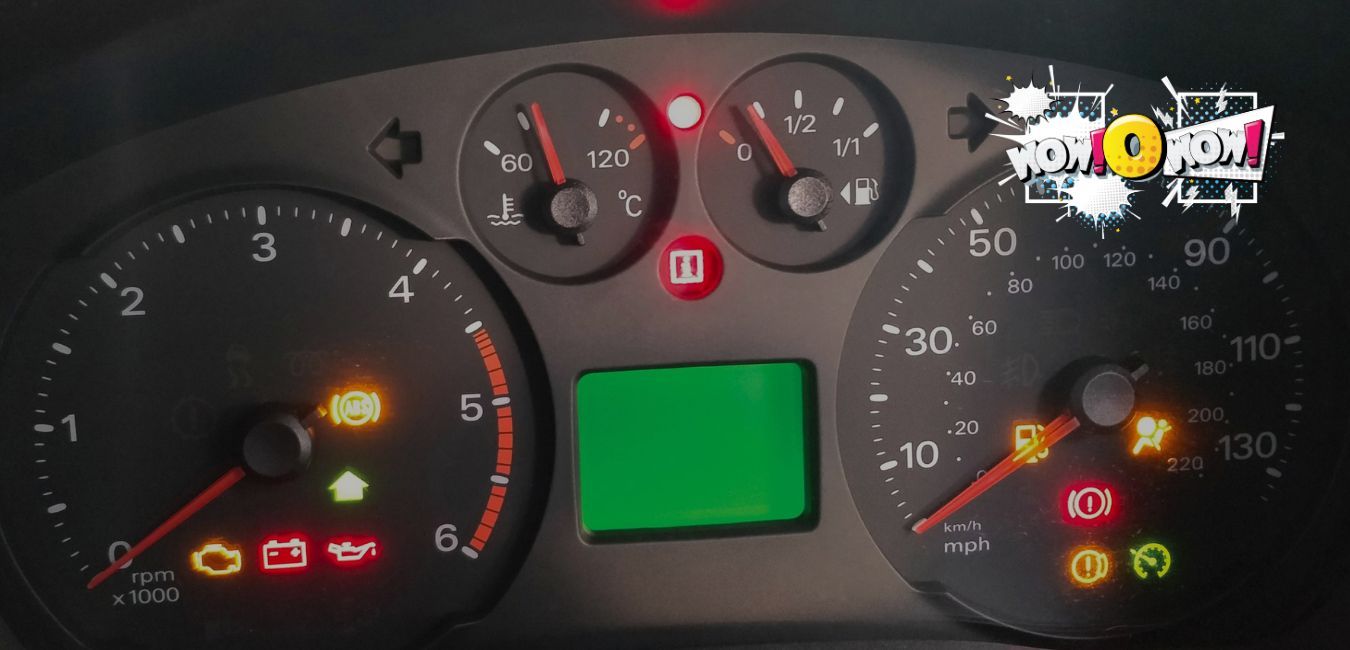
| Red lights | Stop as soon as it is safe |
| Amber or yellow lights | Keep driving, but get it diagnosed soon |
| Green or blue lights | Information only, such as headlights or cruise control |
| The one exception | A flashing check engine light means stop, even though it is amber |
| Worst to ignore | Oil pressure, temperature, and brake warnings |
| Where to confirm | Your owner’s manual, since symbols vary by make |
Most drivers know the lights matter and still guess at which ones are urgent. The color answers that faster than the symbol does. This page sorts the warning lights by how quickly you need to act, explains what ignoring each one actually costs, and links to the detailed guide for whichever light is lit on your dashboard right now.
Symbols and their exact meanings vary by make, model, and year. Use the urgency rule here to decide what to do in the moment, then confirm the specific light against your owner’s manual.
Table of Contents
Which dashboard lights should you never ignore?
Six warning lights account for nearly every urgent dashboard alert, and four of them are red. The table sorts them by how fast you need to act, with the detailed guide for each one linked alongside. Read the color first: red means the car is telling you to stop, amber means book it in, and the flashing check engine light breaks that pattern.
| Warning light | What it usually means | Urgency |
|---|---|---|
| Oil pressure (red) | The engine has lost oil pressure | Stop now. Shut the engine off |
| Coolant temperature (red) | The engine is overheating | Stop now. Let it cool before opening anything |
| Brake warning (red) | Parking brake on, low brake fluid, or a hydraulic fault | Stop now if the parking brake is off |
| Battery or charging (red) | The charging system is not keeping up | Limited time before the car stalls. Drive straight to help |
| Check engine (amber) | An emissions or engine fault; flashing means an active misfire | Steady: get it scanned. Flashing: stop now |
| Tire pressure, TPMS (amber) | One or more tires are low | Check the pressures soon; a very low tire is urgent |
What do red dashboard lights mean?
Red dashboard lights signal a problem that can damage the car or hurt you within minutes, so treat every one of them as an instruction to stop. The oil pressure light means moving parts may be running dry. The temperature light means the engine is overheating. The brake light can mean a hydraulic fault. The charging light means the car is running on battery alone.
Two of those are worse than the rest. Losing oil pressure can seize an engine in a short distance, and an overheating engine can warp a cylinder head or blow a head gasket. Pull over as soon as it is safe, switch off, and call for help rather than pressing on to reach home. Caution: an overheating engine and its coolant are dangerously hot, so never open the radiator cap or the coolant reservoir on a hot engine.
A red brake light with the parking brake released is the one that matters for stopping the car. Have it inspected before driving, and remember that brake work is a shop job. The Car Care Council recommends a brake inspection at least once a year and warns against ignoring brake warning signs.
What do amber dashboard lights mean?
Amber or yellow lights mean a fault that needs attention soon rather than a stop on the hard shoulder. A steady check engine light, the TPMS tire-pressure light, and the ABS light all fall here. You can normally drive to a shop, but the word that matters is soon: amber faults get more expensive the longer they sit, and some of them degrade a safety system.
The flashing check engine light is the exception that catches people out. A flash means an active misfire that can destroy the catalytic converter quickly, so it belongs with the red lights. On the steady version, fueleconomy.gov makes the practical point: the fault may be as small as a loose gas cap or as serious as a failing component, and either way the car should be inspected rather than driven on indefinitely.
What does ignoring a warning light actually cost?
Ignoring a warning light rarely stays cheap. An oil pressure light left alone can end in a seized engine and a replacement rather than a repair. An overheating engine driven further can warp the head. A flashing check engine light ignored for a week adds a catalytic converter to a spark plug job. A brake warning ignored is a safety risk rather than a bill.
The pattern is the same every time: the part that fails first is cheap, and the parts it takes with it are not. That is the argument for scanning a code the day it appears instead of a month later. Low oil pressure in particular can go from a warning light to a stalled engine in very little time. It is also worth running your VIN through NHTSA’s recall lookup, since a light caused by a recalled part is repaired free.
What should you do when a warning light comes on?
Check the color before anything else, because that decides whether you keep driving. Then identify the symbol and act on what it is telling you. There are 4 steps, and the first two take seconds. Doing them in order keeps a cheap fault from becoming a tow.
- Note the color. Red means stop as soon as it is safe; amber means you can usually drive on for now.
- Look up the symbol in your owner’s manual, since the same shape can mean different things across makes.
- Pull over and switch off for any red light, and for a flashing check engine light. Let a hot engine cool before you open anything.
- Have the fault codes scanned for an amber light, then book the repair rather than resetting the light and carrying on.
Resetting a light without fixing the fault is the one move to avoid. The code comes back, and in the meantime the car has stopped telling you about the problem.
Frequently asked questions
Which dashboard lights mean stop driving?
A red oil pressure light, a red coolant temperature light, a brake warning light with the parking brake released, and a flashing check engine light all mean stop the car as soon as it is safe. Continuing to drive risks engine damage, brake failure, or a destroyed catalytic converter.
Is it safe to drive with a warning light on?
Driving with a warning light on depends entirely on the color. Amber lights usually allow a careful drive to a shop, while red lights and a flashing check engine light mean stop. Check the color first, then the symbol, and treat anything red as an instruction rather than a suggestion.
What happens if you ignore the check engine light?
Ignoring a steady check engine light lets a small fault grow into a costly one, often by damaging emissions parts. Ignoring a flashing light is worse, because an active misfire can ruin the catalytic converter in a short distance. Get the codes scanned instead of resetting the light.
Why is my dashboard showing multiple warning lights?
Several warning lights at once usually points to one shared cause rather than several faults. A failing charging system or a weak battery can trip warnings across unrelated systems, and so can a bad ground or a blown fuse. If any of the lights are red, treat the whole set as stop-and-check.
What to do now
Start with the color on the dashboard. Red lights and a flashing check engine light mean pull over as soon as it is safe and switch the engine off. Amber lights mean keep driving carefully and get the fault scanned within days, not months. Then look up the specific light, because the symbol tells you which system is asking for help.
For every warning symbol and what each one means on your car, see our dashboard lights and car terms guide. More maintenance and troubleshooting help lives on the wowowow car care home page.
