

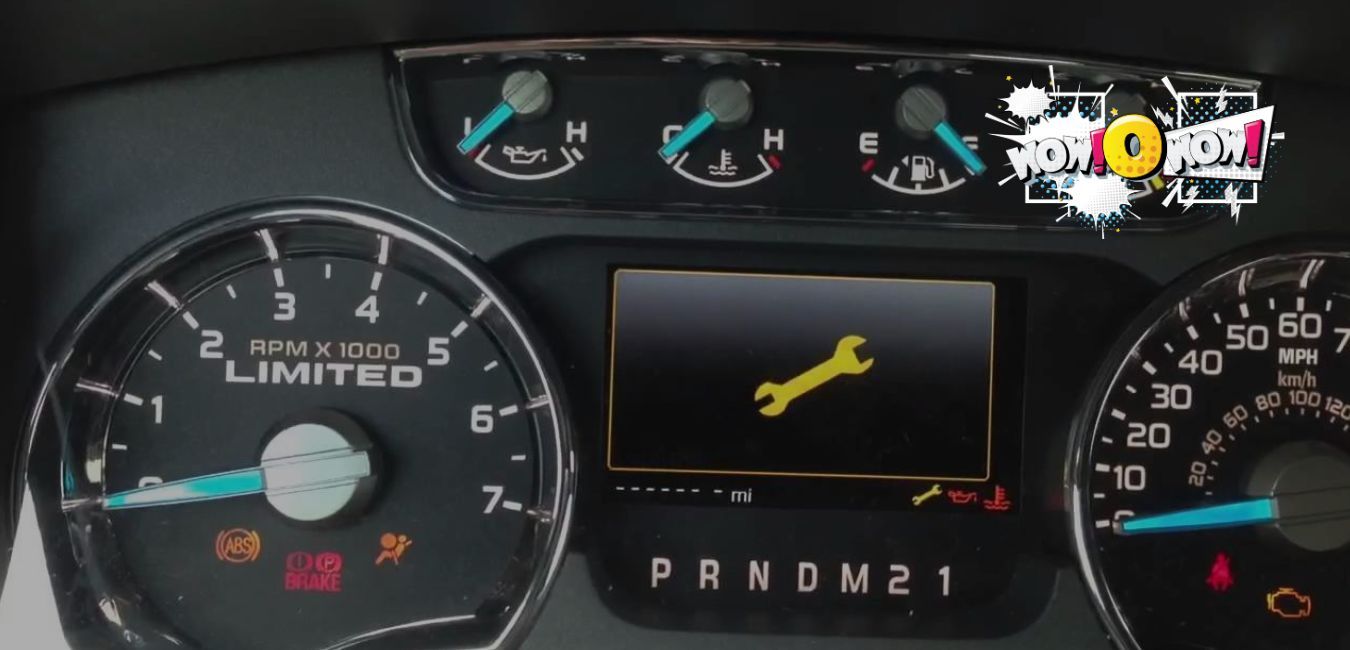
| Most cars | A scheduled-maintenance reminder: a service such as an oil change is due |
| Some cars (e.g. Ford) | A powertrain fault: a transmission or throttle problem |
| How to tell | Drives normally = reminder. Lost power or shifts badly = fault |
| Safe to drive? | Reminder: yes, service soon. Fault with reduced power: drive cautiously, get it checked |
| How to clear it | Reminder resets after the service; a fault must be repaired first |
| The sure way to know | Your owner’s manual: the meaning is make-specific |
The wrench light is the dashboard symbol most likely to be misread, because the same icon is a gentle reminder on one car and a real fault warning on another. A Honda or Toyota owner usually sees it and books an oil change; a Ford owner may see it alongside a sudden drop in power. This page sorts out which is which, how to tell from the way the car drives, and what to do in each case. For every other symbol, see our complete dashboard lights and car terms guide.
The wrench light’s meaning is make-specific, and reset procedures differ by model. Check your owner’s manual for your vehicle, and get a local quote before relying on any repair estimate.
Table of Contents
The two meanings: maintenance reminder vs powertrain fault
The wrench light has two very different meanings, and the car’s behavior tells you which. On most makes it is a scheduled-maintenance reminder: it appears at a service interval, the car drives normally, and it is benign. On some makes, notably Ford, it is a powertrain fault warning that often comes with reduced power or rough shifting and needs diagnosis. Read the symptoms before you panic or ignore it.
| What it is | Signs | What to do |
|---|---|---|
| Maintenance reminder (most makes) | Appears at a mileage or time interval; car drives normally; often a “MAINT” or service message | Book the service soon and reset it afterward |
| Powertrain fault (e.g. Ford) | Reduced power or limp mode, rough shifting, sometimes a check-engine light too | Drive cautiously and have it diagnosed |
The quick test is simple: if the car drives exactly as it always does, the wrench is almost certainly a reminder; if it feels down on power or shifts badly, treat it as a fault. The only source that settles it for certain is your owner’s manual, because carmakers assign the symbol differently, which is the single most important thing to know about this particular light.
When the wrench light is a maintenance reminder
On most cars the wrench light simply means a scheduled service is due, usually an oil change or routine maintenance tied to a mileage or time interval. It often appears with a “MAINT” or mileage message, the car drives normally, and nothing is broken. It is a heads-up to book the service, not a fault, and it resets once the work is done.
Treating it as routine is the right instinct here. The interval is set by the manufacturer, so the reminder is the car keeping track of the schedule for you rather than reporting a problem. Our guide to what a car service includes covers what that visit typically involves, and since an oil change is the most common trigger, the oil change checklist is a useful companion. Confirm the interval against your owner’s manual rather than guessing from the light alone.
When the wrench light is a powertrain fault
On some cars, Ford most notably, the wrench light is the powertrain malfunction indicator, not a service reminder. It signals a fault in the transmission, throttle, or related driveline, and the car may drop into a reduced-power or fail-safe mode to protect itself. If the wrench light appears with weak acceleration, harsh or slipping gear changes, or a check-engine light, treat it as a fault to diagnose promptly.
The reduced-power behavior is deliberate: the car limits output so you can move off the road safely rather than risk further damage. That makes it a get-it-checked situation rather than a casual reminder, and the weak-pedal feeling overlaps with other reduced-power faults covered in why a car says engine power reduced. Because it often sets a diagnostic code, a scan is the way to find the specific cause, which our guide to what the check engine light means explains. The wrench is a separate warning from the check-engine light, which is strictly an emissions indicator. Leave transmission and throttle diagnosis to a technician you can verify through ASE certification.
How to reset the wrench (maintenance) light
If the wrench light is a maintenance reminder, reset it after the service, usually through the dashboard menu or a button sequence in the owner’s manual, and it goes out. If it is a powertrain-fault wrench light, resetting does nothing useful: the fault has to be diagnosed and repaired first, and the light returns until it is. So the reset only applies to the reminder, never to a fault.
Caution: do not clear a wrench light just to make it disappear if the car is down on power or shifting badly, because that hides a real fault instead of fixing it. For a genuine maintenance reminder on a car that drives normally, the reset is harmless once the service is done. It is also worth searching your VIN on NHTSA’s recall lookup, since an open recall on a powertrain part is repaired free, and ignoring an amber warning tends to turn a small job into a larger one.
Frequently asked questions
Is the wrench light serious?
It depends on your car. On most makes the wrench light is a harmless scheduled-maintenance reminder, so it is not serious if the car drives normally. On some makes, such as Ford, it is a powertrain fault that can reduce power, which is serious. If the car has lost power, treat it as a fault.
Can I drive with the wrench light on?
If the wrench light is a maintenance reminder and the car drives normally, yes, just book the service soon. If it is a powertrain fault with reduced power or rough shifting, you can usually drive gently to get it checked, but do not ignore it. Severe power loss means you should stop and arrange a tow instead.
How do I turn off the wrench light?
If the wrench light is a maintenance reminder, reset it after the service through the dashboard menu or the procedure in your owner’s manual. If it is a powertrain-fault light, it will not reset, because the underlying transmission or throttle fault has to be diagnosed and repaired first. Resetting a fault only hides it temporarily.
Does the wrench light mean I need an oil change?
Often, yes. On many cars the wrench or maintenance light signals that routine service such as an oil change is due, based on a mileage or time interval. Check the message and your service schedule to confirm. Once the service is done, reset the reminder and the light goes out until the next interval.
What to do now
Start with how the car drives. If it drives normally, the wrench light is almost certainly a maintenance reminder: book the service and reset it afterward. If the car has lost power or is shifting badly, treat it as a powertrain fault and have it scanned and diagnosed, especially on a Ford. When you are unsure, the owner’s manual is the only source that settles what the symbol means on your car.
A wrench light on a normal-driving car means service it soon; a wrench light with reduced power means get it diagnosed rather than resetting it away. For everything on keeping your car healthy, see our complete automotive care hub.
