

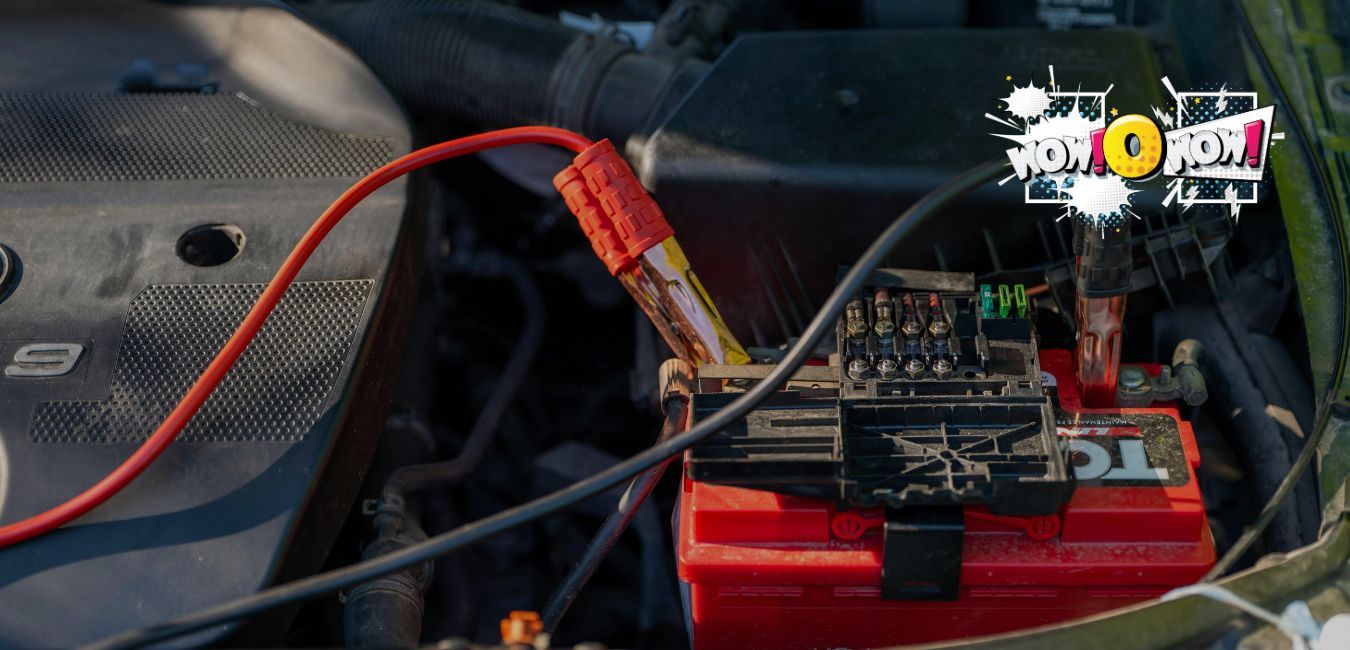
| Red terminal | Positive (+) — feeds power to the starter and the car |
| Black terminal | Negative (−) — grounds to the engine and chassis |
| Trust color alone? | No — confirm with the + and − stamps on the case |
| Backup checks | POS/NEG letters, post size, cable routing |
| If connected backwards | Blown fuses, ECU damage, sparks, possible explosion |
| Working order | Connect positive first; disconnect negative first |
Red means positive on a car battery in almost every case, but “almost” is the word that damages cars. This guide covers the 5 ways to identify each terminal, the connect/disconnect order, and what a backward connection does.
Terminal markings vary slightly by battery maker — confirm against the stamps on your battery and your owner’s manual. Last updated: July 2026.
Table of Contents
Which terminal is positive and which is negative?
The positive terminal is the red one marked with a + symbol, and the negative terminal is the black one marked with a − symbol. There are 5 tells for each terminal, so you never have to depend on color by itself. They are the cable color, the stamped symbol, the letter marking, the post size, and where the cable goes.
| Tell | Positive terminal | Negative terminal |
|---|---|---|
| Cable color | Red | Black |
| Symbol stamped on case | + | − |
| Letter marking | POS or P | NEG or N |
| Post size | Usually slightly larger (confirm on your battery) | Usually slightly smaller |
| Where the cable goes | Feeds the starter and fuse box | Bolts to the engine block or chassis (ground) |
Match at least two tells before touching anything. Terminal layout and sizing also decide replacement fit; see whether you can use any battery in a car.
How do I tell positive from negative if the colors are missing?
Identify the terminals without color by using the markings and the cables themselves. Faded insulation, aftermarket cables, and heavy corrosion can hide or even reverse the expected colors, so work through these 4 checks in order:
- Find the + and − symbols stamped or molded into the battery case next to each post.
- Look for the letters POS/P and NEG/N printed near the posts or on the cover.
- Compare the posts: the positive post is usually slightly larger in diameter than the negative post.
- Follow the cables: the negative cable bolts to bare metal on the engine block or chassis, while the positive cable runs to the starter and fuse box.
Stop if you still cannot tell. Caution: never guess at battery polarity; a reversed connection can damage the car and injure you. Check the owner’s manual or have someone confirm before connecting anything. Crust hiding the markings? Our guide to what causes corrosion on a car battery explains how to clean the posts safely first.
Why does it matter which terminal is which?
Battery polarity matters because it sets the direction of current through the car’s electrical system, and modern cars are built to receive it one way only. Connecting jumper cables, a charger, or a new battery backwards (reversed polarity) can blow fuses and fusible links, destroy the ECU and other control modules, damage the battery, and throw sparks. Per OSHA’s battery-handling guidance, a lead-acid battery gives off flammable hydrogen gas, so a spark at the terminals can ignite it and cause the battery to explode. Repair bills range from a blown fuse to four-figure module replacement and vary widely by vehicle.
Which terminal do I connect or disconnect first?
Disconnect the negative (−) terminal first and reconnect it last, and do the opposite when installing: connect the positive (+) first. The order exists because the negative terminal grounds to the whole chassis. Remove the negative first and the circuit is broken, so a wrench that slips against the body afterward cannot create a short and a shower of sparks.
The same logic drives jump-starting: AAA’s jumper-cable procedure clamps the final black cable to bare metal in the engine bay, not to the dead battery’s negative post, to keep any spark away from the battery. Follow the full clamp order in our guide to how to jump-start a car safely; some vehicles use a remote jump post, so check the owner’s manual.
FAQ
Is the positive terminal always red?
Usually, but not always — red normally marks positive on a car battery, yet faded, corroded, aftermarket, or incorrectly replaced cables can be misleading. Always confirm with the + symbol stamped on the battery case beside the post before connecting cables, a charger, or a new battery.
What does the + and − mean on a car battery?
The + marks the positive terminal, normally red, which feeds power to the starter and the rest of the car, and the − marks the negative terminal, normally black, which grounds to the engine and chassis. Both symbols are stamped or molded into the case near each post.
What happens if you connect a car battery backwards?
Connecting a car battery backwards can blow fuses and fusible links, damage the ECU and other electronic modules, harm the battery, and throw sparks that can ignite hydrogen gas. Treat a backward connection as a serious mistake: stop immediately, disconnect, and have the electrical system checked before driving.
Which goes first, positive or negative?
Connect the positive (+) terminal first and the negative (−) last when installing a battery, and disconnect the negative first when removing one. The order prevents a short circuit and sparks if a tool touches the car’s metal body while the other terminal is still connected.
What to do now
Treat red as positive (+) and black as negative (−), confirm it with the + and − stamps before touching anything, and keep the order rule: positive on first, negative off first. Have an ASE-certified technician check the electrical system if a connection ever went on backwards. For testing, charging, corrosion, and replacement, see the complete car battery guide in our automotive hub.
