

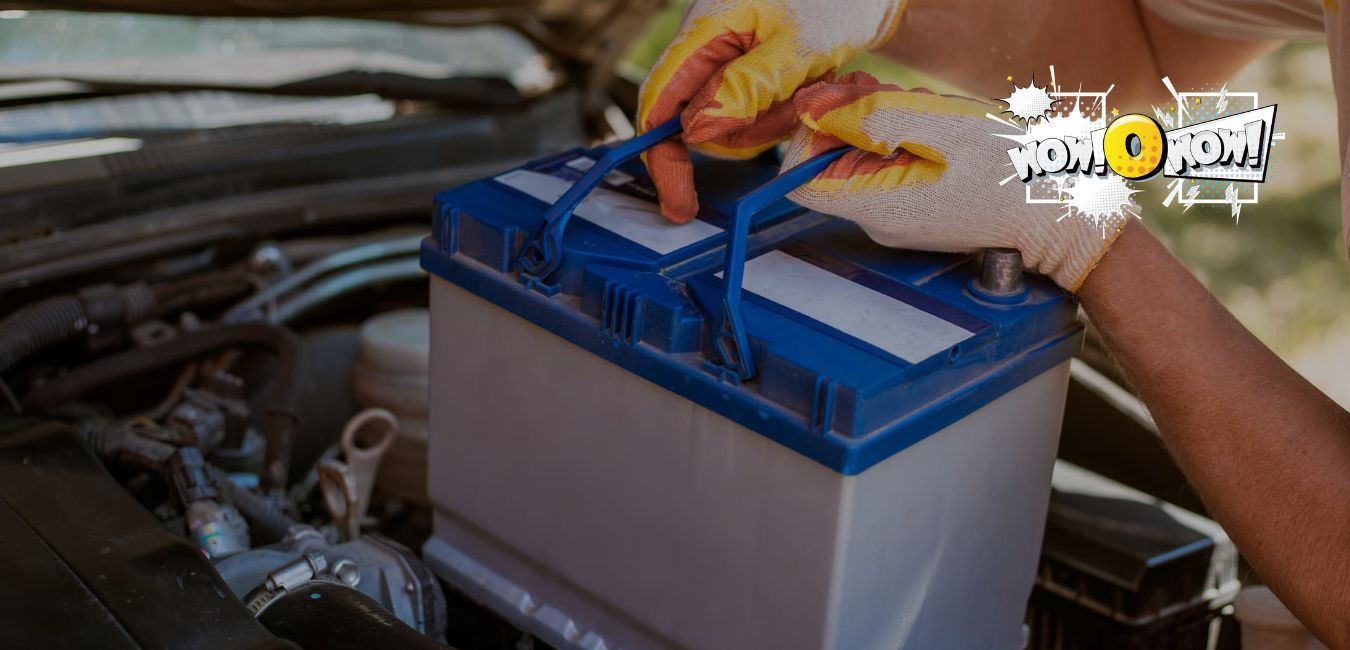
| Short answer | No — the battery must match your car, not just be “a 12-volt battery” |
| Four things that must match | Group size, cranking amps (CCA), terminal type/position, battery type (AGM/EFB) |
| Higher CCA? | Usually fine, if the size, terminals, and type still match |
| Bigger physical size? | Only if it fits the tray and the hold-down secures it |
| Stop-start car? | Don’t downgrade the type; it likely needs AGM/EFB + a BMS registration |
| How to find yours | Owner’s manual, the label on your old battery, or a fitment lookup by year/make/model |
“Can you use any battery in a car?” is really a fitment question, and the answer is that the battery has to match your specific vehicle on four points. Get those right and almost any reputable battery will work; get one wrong and you get hard starting, a loose battery, or electrical faults. This guide explains exactly what has to match, how to find your numbers, and what goes wrong when a battery is mismatched.
Every fitment value below is vehicle-specific. Confirm your exact group size, CCA, terminal layout, and battery type against your owner’s manual or the label on your current battery before you buy.
Table of Contents
What has to match? The 4 fitment rules
A replacement battery has to match your car on four things: group size, cranking amps, terminal layout, and battery type. Group size is the physical fit, CCA is the starting power, the terminals decide whether the cables even reach, and the type is what your charging system expects. The table below is the whole method in one place.
| Rule | What it is | Where to find it | Why it matters |
|---|---|---|---|
| Group size (BCI) | The standardized physical size, terminal placement, and hold-down style | Owner’s manual, the label on your old battery, or a fitment lookup | Must fit the tray and secure under the hold-down; the wrong size won’t lock down |
| Cranking amps (CCA) | Cold Cranking Amps — current delivered at 0°F to start the engine | Printed on the old battery, listed in the manual | Too low means weak or failed starts, worse in cold. Match or exceed the original |
| Terminal type & position | Top-post vs. side-post, and where the (+) and (−) posts sit | Look at your current battery | The cables must reach the correct posts; the wrong layout won’t connect safely |
| Battery type + registration | Flooded, EFB, or AGM — and whether the car needs a BMS relearn | Owner’s manual (especially on stop-start cars) | Stop-start and high-demand cars need EFB/AGM; downgrading causes faults and short life |
Group size is worth a note because it is the one people skip. The Battery Council International (BCI) group number encodes the case dimensions, terminal positions, and hold-down type, which is why matching it guarantees physical fit. You can read how the standard works at Battery Council International. Match the group size and type exactly, and match or slightly exceed the CCA, and you have the right battery.
What happens if you use the wrong battery?
Using the wrong battery causes a specific problem for each thing you get wrong, not a vague “it might not work.” Each mismatch maps to its own failure:
| Mismatch | What goes wrong |
|---|---|
| CCA too low | Slow cranking or no-starts, especially on cold mornings |
| Wrong group size | Battery sits loose, the hold-down won’t secure it, and the cables may not reach |
| Wrong terminal layout | Cables can’t reach the right posts; forcing it risks a reversed-polarity connection |
| Wrong type on a stop-start car | Shorter battery life, charging faults, and dashboard warnings |
Caution: a battery that doesn’t fit the tray and hold-down can shift while you drive, and a moving battery can short against metal or chafe a cable — never just wedge an ill-fitting battery in place. And because the terminals must match, forcing cables onto the wrong posts can reverse polarity, which can damage the car’s electronics in an instant. If you are ever unsure which post is which, confirm before connecting anything: red is positive, as covered in is red positive on a car battery.
Can I use a battery with higher CCA or bigger capacity?
Yes, you can use a battery with a higher CCA rating, and it can even help in a cold climate, as long as the group size, terminals, and battery type still match your car. A higher cranking-amp rating gives you starting margin and won’t harm the charging system, since the car only draws the current it needs. Extra reserve capacity is likewise fine and useful if you run a lot of accessories.
The one thing “bigger” does not mean is bigger physically. A larger case only works if it actually fits the battery tray and the hold-down can still secure it. If a higher-rated battery comes in the same group size, you are fine; if it comes in a larger case, it has to fit and lock down or it is the wrong battery. Cold-climate drivers in particular benefit from matching or exceeding CCA, because a battery’s cranking power drops sharply in the cold — the mechanism is explained in how cold weather affects your battery, and general cold-weather battery guidance from AAA is a solid reference.
Does my car need a specific battery type (AGM/EFB)?
Many modern cars do need a specific battery type. Vehicles with stop-start systems (the engine shuts off at red lights) or heavy electrical demand usually require an EFB or AGM battery designed for frequent cycling, and a lot of them also need the new battery registered or relearned to the battery-management system with a scan tool. Fitting a cheaper standard flooded battery in a car that specifies AGM can shorten the battery’s life and trigger charging faults.
Check your owner’s manual before changing battery type, and have the new battery registered if your car requires it — on many makes that relearn is a shop step, and skipping it means the charging system keeps treating the car as if the old battery is still installed. If you are wondering why the correct battery for these cars costs more, that is covered in why car batteries are so expensive. Leave the type change and registration to a professional if your car has stop-start and you don’t have the scan tool to relearn it, and consult ASE resources to find a certified technician.
Frequently asked questions
How do I know what battery size my car takes?
Check three places, in order: your owner’s manual, the label on your current battery (which lists the group size and CCA), and an online or in-store fitment lookup by year, make, and model. All three should agree. If your current battery was itself a wrong fit from a previous owner, trust the owner’s manual over the installed battery.
Can I put a bigger battery in my car?
Only if it physically fits. A battery with a higher CCA or reserve-capacity rating is generally fine and can be an upgrade, but a physically larger case only works if it fits the tray and the hold-down still secures it, and if the terminal layout matches. A battery you can’t bolt down is the wrong battery, no matter how good the rating.
Does a new battery have to be registered to the car?
On many modern cars, yes. Vehicles with stop-start or smart charging often need the new battery registered or relearned to the battery-management system so it charges correctly. It is frequently a shop step requiring a scan tool. Check your owner’s manual, and if registration is required and you can’t do it yourself, have a shop handle the swap.
Is a more expensive battery always better?
No. The right battery is the one that matches your car’s specs, not the priciest one on the shelf. A premium AGM battery is wasted money if your car doesn’t need AGM, and a cheap battery rated below your car’s CCA will fail early. Match the group size, CCA, terminals, and type first; price is secondary to correct fitment.
What to do now
Before you buy, look up your car’s four numbers — group size, CCA, terminal layout, and battery type — from your owner’s manual or the label on your old battery, and match or slightly exceed the CCA. If your car has stop-start, confirm whether it needs AGM/EFB and a registration step. Still weighing options? The sibling case for a cranking-vs-deep-cycle battery is in whether a marine battery works in a car, and the full reference lives in our complete car battery guide (hub publishing shortly). For everything else on keeping your car healthy, see the automotive care hub.
