

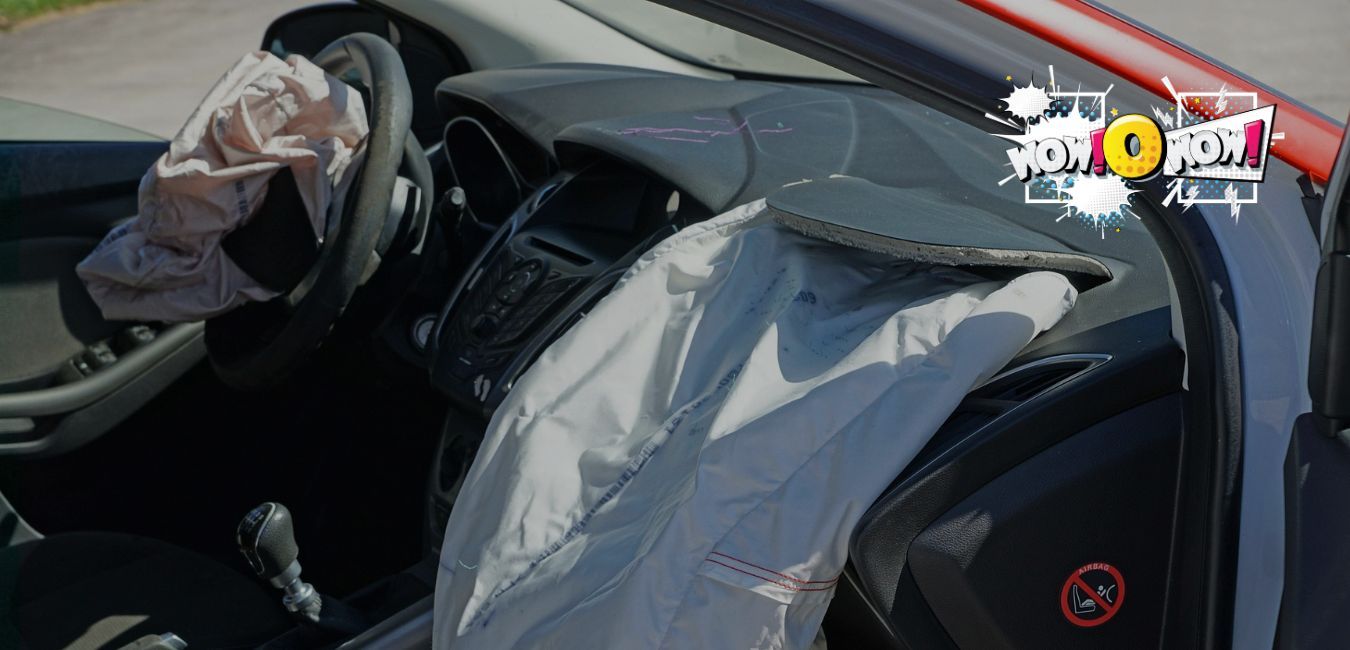
| Safe to drive? | No. Have it towed; move it only to get out of traffic |
| What deployment means | A moderate-to-severe crash, about 10–16 mph into a rigid wall (IIHS) |
| Can airbags be reused? | No. Airbags deploy once and must be replaced (NHTSA) |
| Typical repair cost | Often $1,000–$2,000 per airbag; roughly $1,500–$6,000 total, varies by vehicle |
| Who fixes it | A reputable shop using OEM parts. Airbag work is never DIY |
| The one hidden risk | Counterfeit replacement airbags, which can fail in a crash |
A car that just had its airbags go off may still start and roll, which is why so many drivers wonder whether they can drive it home. Running and roadworthy are not the same thing. This guide covers why the answer is no, what to do in the first few minutes, what the crash may have damaged, and what the repair costs.
Repair costs vary widely by make, model, and how many airbags deployed, so treat the ranges here as rough guidance and get a written quote. Rules on driving a damaged car vary by state.
Table of Contents
Is it safe to drive after the airbags deploy?
A car whose airbags have deployed is not safe to drive, even if the engine starts and nothing looks badly broken. Airbags only fire in a crash hard enough to damage parts you cannot inspect at the roadside, and the bags themselves are now spent. There are 4 main reasons to have the car towed instead:
- Hidden crash damage. The impact can bend steering and suspension parts, crack the radiator, or damage brake lines and the frame.
- No airbag protection. Air bags can only deploy once, so a second crash on the way home would happen with no working airbags, per NHTSA.
- Blocked view or controls. A deflated bag hanging from the wheel or dash can get in the way of your hands and your view.
- Disabled safety systems. The airbag (SRS) warning light stays on until the system is repaired, which means it will not protect anyone until then.
The one exception is moving the car a short distance out of live traffic. Do it only if the car steers and brakes normally, nothing is leaking or smoking, and the deflated bag does not block your view. Otherwise, leave it where it is with the hazard lights on.
What happens when airbags deploy?
Airbags deploy when crash sensors detect a sudden, severe slowdown, and they inflate in less than 1/20th of a second, per NHTSA. A frontal airbag typically fires in a crash equal to hitting a rigid wall at about 10 to 12 mph for an unbelted occupant, or about 16 mph for a belted one, according to IIHS. That threshold is why a parking-lot tap rarely sets them off.
Several things usually happen in the same instant:
- The seatbelt pretensioners fire and pull the belts tight.
- The airbag control module records the crash and turns on the SRS warning light.
- Some vehicles shut off the fuel pump, unlock the doors, or switch on the hazard lights. Your owner’s manual says which of these your car does.
Dust and a burnt smell in the cabin are common after deployment. Caution: the hot gases from an airbag can cause burns, per IIHS, so check skin and eyes, and get out of the car into fresh air if it is safe.
What should you do right after the airbags deploy?
Follow these 6 steps in the first minutes after airbags deploy. The order puts people before the car.
- Turn off the engine and switch on the hazard lights. Turning the engine off lowers the risk of fire from damaged wiring or a fuel leak.
- Check everyone for injuries. Call 911 if anyone is hurt. Get checked by a doctor even if you feel fine, because airbag bruises, abrasions, and burns are common, and some injuries show up later.
- Get out and away from traffic if it is safe. Stand well off the road, behind a barrier if there is one. Caution: in a hybrid or electric car, stay away from the car if you see smoke or hear hissing or popping, and tell the 911 dispatcher it is an EV or hybrid.
- Document the scene. Photograph the cars, the deployed airbags, the dashboard warning lights, and the road, then call your insurer.
- Arrange a tow. Use your roadside assistance or your insurer’s tow service rather than driving the car to a shop.
- Leave the airbag system alone. Do not pull out the spent bags, unplug connectors, or try to clear the SRS light. Airbag modules contain pyrotechnic inflators, and this is strictly a job for a trained technician.
What does airbag deployment do to the rest of the car?
A crash strong enough to deploy airbags can damage 7 systems besides the airbags themselves. The table shows what to watch for and why each one makes driving risky.
| System | What the crash can do | How you might notice | Why it matters |
|---|---|---|---|
| Steering and suspension | Bend tie rods, control arms, or the steering column | The car pulls, the wheel sits off-center, or the steering feels loose | You can lose control at speed |
| Brakes | Damage brake lines, calipers, or the ABS | A soft pedal, a brake warning light, or a fluid leak | Braking can weaken or fail |
| Cooling system | Crack the radiator or condenser | Coolant under the car, steam, or a rising temperature gauge | The engine can overheat within minutes |
| Fuel system | Trigger a fuel shutoff or crack a line | The car will not restart, or you smell fuel | A fuel leak is a fire risk |
| Electrical and sensors | Damage wiring, crash sensors, and the airbag module | SRS and other warning lights stay on | The safety systems are offline |
| Seatbelts | Fire the pretensioners, which are typically one-time devices | Belts stay locked or retract poorly | The belts may not protect you in the next crash |
| Windshield and glass | Crack the windshield, sometimes from the passenger airbag itself | Visible cracks or a sagging windshield | Your view and the roof support can both be weaker |
A car that pulls to one side after a crash often has bent suspension or alignment damage, covered in why a car pulls to one side. Fluid on the ground after an impact is worth identifying before anyone moves the car, as in post-accident oil leaks. For a cracked windshield, see whether you can drive with a cracked windshield. For how the brakes work and fail, see how a car brake system works.
How much does it cost to replace airbags after deployment?
Replacing a deployed airbag typically costs $1,000 to $2,000 per airbag, and a full repair after deployment often runs about $1,500 to $6,000, according to SoFi. The total depends on how many bags fired and what else needs replacing. Replacing the airbag control module, crash sensors, and clock spring can add several hundred dollars on top.
Costs vary widely by make and model, so get a written quote that lists every part. On an older car, the airbag bill plus the crash damage can approach the car’s value. That is when an insurer may declare it a total loss rather than pay to fix it.
How do you make sure replacement airbags are genuine?
Counterfeit replacement airbags are a real risk after a deployment. Counterfeit airbags have been shown to consistently malfunction, per NHTSA, and IIHS warns they can fail to deploy or throw metal shrapnel. CARFAX estimated that nearly 2 million vehicles were back on U.S. roads after an airbag deployment in the previous two years, in its 2024 report, and each one is a possible target.
Protect yourself with 3 checks:
- Use a reputable repair shop, ideally one certified by your vehicle’s manufacturer.
- Ask for OEM airbags, and keep the invoice that lists the part numbers.
- Have a trusted mechanic inspect the airbags on any used car you buy that has a crash on its record.
Is it illegal to drive with deployed airbags?
No single U.S. rule covers driving a car with deployed airbags, so the legal answer depends on your state. Check with your state DMV before driving a repaired or unrepaired car on public roads, especially if your state requires safety inspections. The safety answer does not change from state to state: a car with spent airbags and possible crash damage should be towed, not driven.
Frequently asked questions
Can airbags be reused after they deploy?
No, airbags cannot be reused after they deploy. Each airbag inflates only once, and NHTSA recommends replacing airbags after every deployment.
Do airbags deploy in minor accidents?
Airbags usually do not deploy in minor accidents. A frontal airbag typically fires only in a crash equal to hitting a rigid wall at about 10 to 16 mph, so most low-speed bumps and fender benders do not set them off.
Will a car start after the airbags deploy?
A car often still starts after the airbags deploy, but some vehicles shut off the fuel pump after a crash and will not restart until it is reset. Either way, do not drive it; check your owner’s manual and have it towed.
Is a car totaled if the airbags deploy?
A car is not automatically totaled when the airbags deploy. Your insurer decides by comparing the full repair cost, airbags included, with the car’s value.
What to do now
Do not drive a car once the airbags have deployed. Turn it off, check everyone for injuries, get clear of traffic, and have the car towed to a reputable shop that uses OEM airbags. Ask for a written quote, and confirm the SRS light is off and the system is fully repaired before the car goes back on the road.
Spent airbags and hidden crash damage make the car unsafe until a professional inspects and repairs it, so tow it rather than driving it. To understand the system being repaired, see what SRS means in a car, and for more diagnosis guides, visit our car troubleshooting hub.
