

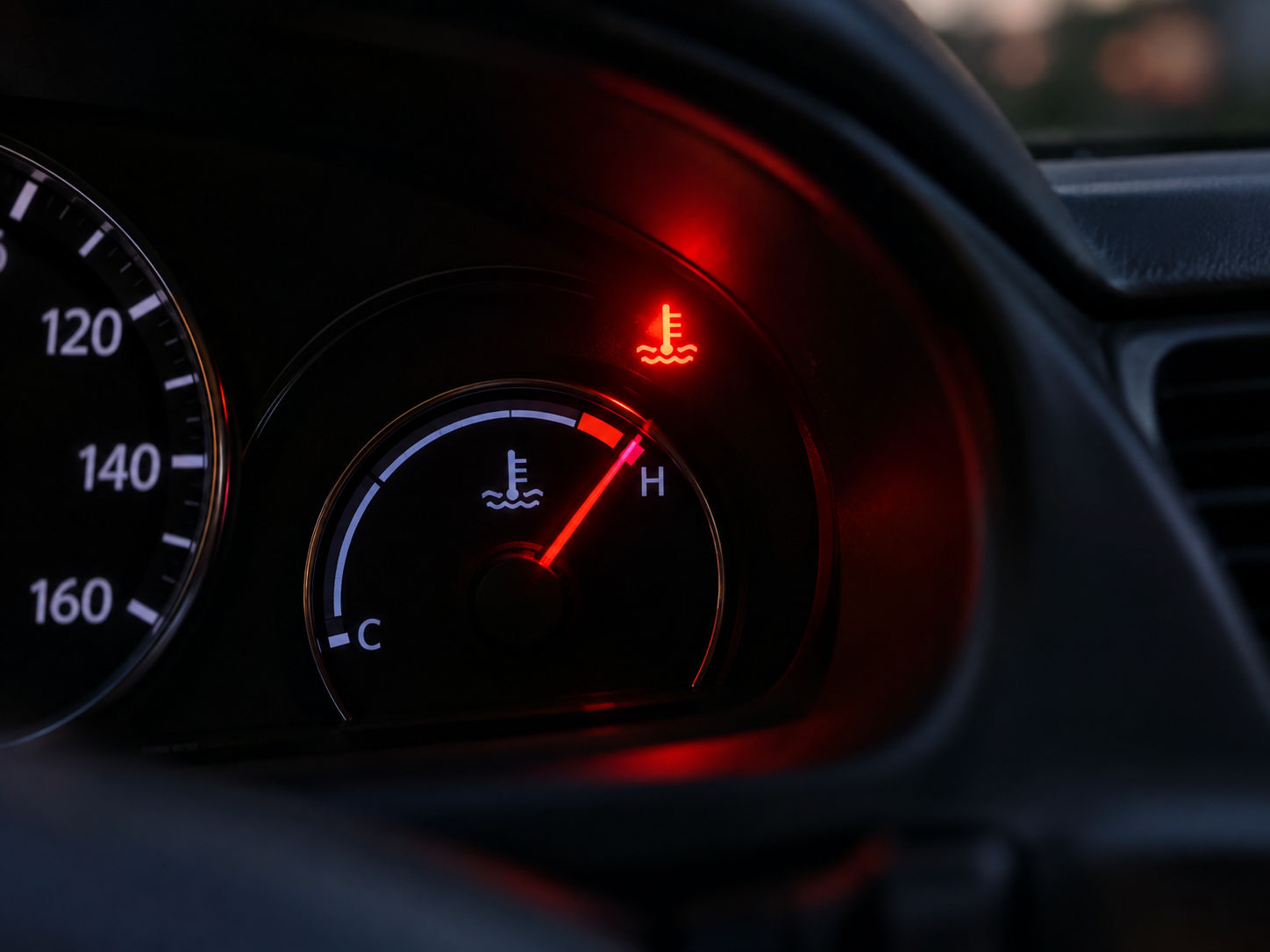
At a Glance
| What it means | Red = the engine is overheating. Blue = the engine is still cold |
| Is it urgent? | Red: yes. Pull over and turn the engine off as soon as it is safe |
| What to do | AC off, heater on full, pull over, engine off, let it cool, then check coolant |
| The one hazard | A hot cooling system is pressurized. Never open the cap until it has cooled |
| Most common cause | Low coolant from a leak, then a stuck thermostat, water pump, or fan fault |
| Make variations | Some cars use a gauge, an amber light, or a text warning. Check your manual |
The temperature light is one symbol that carries two opposite messages, and the color is the whole story. Red is one of the two most urgent lights on any dashboard. Blue is nothing more than a note that the engine has not warmed up yet. This page covers how to tell them apart, the exact steps to take when the red one appears, what usually causes it, and when to stop and get a tow. For every other symbol, see our complete dashboard lights and car terms guide.
Symbols, colors, and warning behavior vary by make and model. Check your owner’s manual for your vehicle, and get a local quote before relying on any repair estimate.
Table of Contents
Red vs blue temperature light: what is the difference?
A red temperature light means the engine coolant is too hot and the engine is overheating, which is a stop-now warning. A blue temperature light means the coolant is still cold and the engine has not reached operating temperature, which is normal after a cold start and clears on its own. The two lights share a thermometer symbol, so the color is what decides the response.
| What you see | What it means | Urgency | What to do |
|---|---|---|---|
| Red thermometer light | The engine is overheating | Stop now | Pull over, engine off, let it cool |
| Temperature gauge at or near H, or in the red zone | The engine is overheating, even with no light yet | Stop now | Treat it exactly like the red light |
| Blue thermometer light | The engine is still cold | None | Drive gently; it goes out as the engine warms |
| Light flashes on for a second at startup | The normal bulb check | None | Nothing, as long as it goes out |
| Red light on a cold engine, gauge reading normal | Often a faulty temperature sensor or wiring | Get it checked soon | Confirm with the gauge, then have it scanned |
Not every car shows both colors. Many cars have only the red warning plus a needle gauge, some use an amber light or a text message such as “Engine overheating,” and some show a numeric coolant temperature instead. The color logic still holds wherever the light appears: red is hot and urgent, blue is cold and informational. When the symbol on your dash does not match either, the owner’s manual has the final word.
The red temperature light shares the top of the urgency list with one other light. Both overheating and lost oil pressure can wreck an engine within minutes, which is why our guide to what the oil light means gives the same stop-now advice. If both are lit together, stop immediately.
What to do when the red temperature light comes on
Turn the AC off and the heater on full, then pull over and switch the engine off as soon as it is safe. Leave the hood and the coolant cap closed until the engine has cooled, then check the coolant level. If the engine will not stay cool or the coolant is leaking, have the car towed rather than driven.
- Turn the AC off and the heater on full. Set the temperature to hottest and the fan to maximum. The heater core works like a small second radiator, so this pulls some heat out of the engine while you look for a safe place to stop. Expect the cabin to get hot, and open the windows.
- Pull over safely and turn the engine off. Signal, get out of traffic, and switch off. Do not try to finish the trip, because every minute of running hot adds damage.
- Leave the hood and cap closed while it cools. A hot cooling system is under pressure. AAA advises waiting at least 30 minutes before opening the hood to avoid burns, and the engine often needs longer than that to be safe to touch. Our guide to how long a car takes to cool down covers the timing in detail.
- Check the coolant level once the engine is cold. Look at the see-through reservoir and compare the level against its marks. Look under the car for a puddle of brightly colored fluid.
- Top up if it is low, then watch the gauge. Add the coolant type your owner’s manual specifies, mixed as the label directs. Restart and keep an eye on the gauge for the next few miles.
- Tow it if it will not stay cool. If the light returns, the coolant is pouring out, or you see steam or smoke, switch off and call for a tow.
Caution: never open the radiator cap or the coolant reservoir cap on a hot engine. The system is pressurized, and opening it can spray scalding coolant and steam. Keep your hands clear of the cooling fan too, because on many cars it can switch on by itself after the engine is off.
The heater trick is the step most drivers do not know, and it is genuinely useful in traffic when you cannot stop right away. It is not a fix, though. It buys a little time to reach a safe spot, nothing more. A car that overheats again after a top-up has a real fault, and the full cause-by-cause walkthrough is in our guide to why a car overheats and what to do right now.
Why is the engine overheating?
Five causes account for most red temperature lights, and low coolant from a leak is the most common. A stuck thermostat, a failing water pump, a radiator or cooling-fan fault, and a blown head gasket make up the rest. Only topping up coolant is a roadside job; the repairs behind every cause on this list belong in a shop.
| Cause | Common clue | Repair scale (get a quote) |
|---|---|---|
| Low coolant or a leak | Low reservoir, a puddle, or a sweet smell | From a top-up to a hose, radiator, or pump repair |
| Thermostat stuck closed | Overheats quickly, often with hoses that stay cool | Usually a modest repair |
| Failing water pump | Coolant weeping near the pump, sometimes a whine | Moderate; varies widely by engine |
| Radiator or cooling-fan fault | Overheats mainly in traffic or at idle | Minor to moderate |
| Blown head gasket | Thick white exhaust smoke, coolant loss with no visible leak | Major; sometimes more than the car is worth |
A few related problems can also trigger the light. AAA lists a worn serpentine belt and low engine oil among overheating causes, and a faulty temperature sensor can switch the red light on when the engine is actually fine. The sensor case is the one exception to “stop now,” and it can only be confirmed when the gauge reads normal and the engine is genuinely cool, so treat the light as real until a shop proves otherwise.
Two clues point straight to a cause. A syrupy, sweet smell means coolant is escaping, and our guide to why a car smells sweet like coolant uses where you smell it to find the source. Thick white smoke from the tailpipe alongside overheating is the head gasket warning sign, covered in what white exhaust smoke means. Leave thermostat, water pump, fan, and head gasket work to a professional, and use a technician you can verify through ASE certification.
Is it ever safe to keep driving with the temperature light on?
Driving with a red temperature light is never safe, because the risk is permanent engine damage rather than a bigger repair bill. Overheating can warp the cylinder head, blow the head gasket, and in the worst case seize the engine. A blue temperature light is the opposite case: the car is safe to drive, and gentle driving helps it warm up faster.
The damage comes from heat the cooling system can no longer carry away. Engine parts expand as they get hotter, and past a point they distort. An aluminum cylinder head can warp, which breaks the seal of the head gasket and lets coolant leak into the cylinders or the oil. Push further and pistons can scuff and seize in their bores. Each of those is a far larger job than whatever caused the overheating in the first place, which is why pulling over early is the cheapest decision available.
The gray area is the needle creeping above its normal position without the light coming on. That is the engine warning you before the warning light does. Ease off, switch the AC off and the heater on, and plan to stop soon. Our guide to the hidden dangers of ignoring dashboard warning lights explains why small warnings like this grow into expensive ones. It is also worth searching your VIN on NHTSA’s recall lookup, because if an open safety recall covers a cooling-system part on your car, the dealer repairs it for free.
Frequently asked questions
Can I drive with the temperature light on?
Not with a red temperature light. A red light means the engine is overheating, so pull over and turn the engine off as soon as it is safe to avoid serious damage. A blue temperature light only means the engine is still cold, and the car is fine to drive gently while it warms up.
Why is my temperature light blue?
A blue temperature light means the engine has not yet reached normal operating temperature. The light is normal after a cold start, stays on longer in cold weather, and goes out once the engine warms. A blue light is not a warning, so there is nothing to fix unless it never goes out.
What do I do if my car overheats while driving?
Turn the AC off and the heater on full, then pull over safely and switch the engine off. Leave the hood and coolant cap closed until the engine has cooled. Check the coolant level once it is cold, and have the car towed if it will not stay cool or is leaking.
Is the temperature light the same as the coolant light?
The temperature light and a low-coolant light are related but not identical. The red temperature light warns that the engine is overheating, while a low-coolant warning means the level has dropped. Low coolant is a common cause of overheating, so the two often appear together, and both mean check the cooling system.
What to do now
Check the color first. A blue temperature light means the engine is cold, and you can drive on normally. A red temperature light, or a gauge needle at the hot end, means the engine is overheating. Turn the AC off and the heater on full, pull over, and switch the engine off.
Do not keep driving on a red temperature light: let the engine cool with the hood and cap closed, check the coolant once it is cold, and have the car towed if it will not stay cool. For every other warning on the cluster, see our dashboard lights and car terms guide, and for everything on keeping your car healthy, our complete automotive care hub.
