

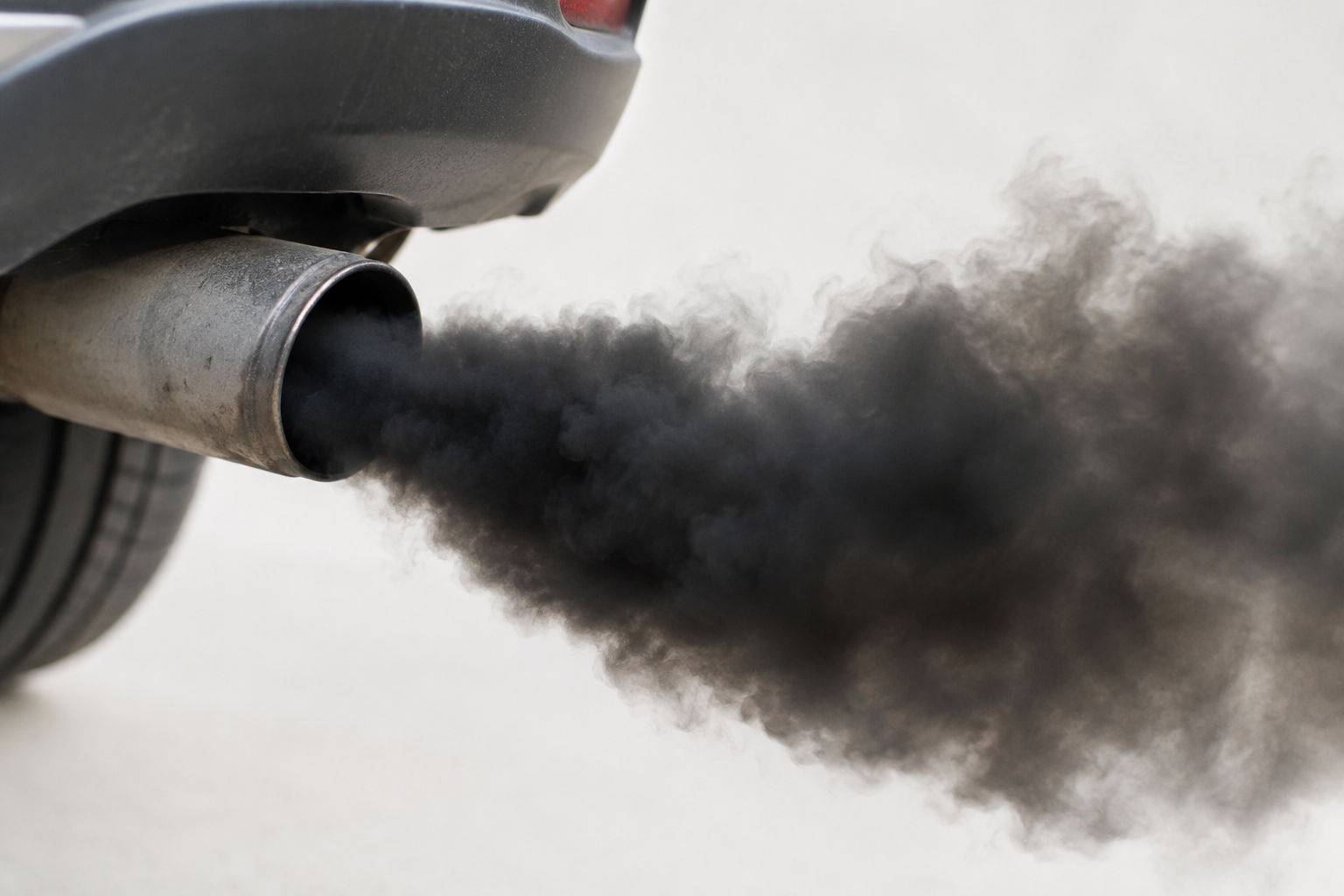
At a Glance
| What it means | The engine is burning too much fuel for the air it has (a rich mixture) |
| #1 cause | A clogged air filter, the cheap and common one. Check it first |
| Safe to drive? | Usually short-term, but fix it soon to protect the catalytic converter |
| Fast check | Inspect the air filter; have the codes read with an OBD-II scanner |
| Other causes | MAF sensor, oxygen sensor, leaking injectors, fuel-pressure regulator |
| Diesel note | Black smoke is more common on diesels; think injectors, EGR, or turbo |
Black smoke from the exhaust is the one smoke color that points at fuel rather than fluid. White smoke is about coolant and blue smoke is about oil, but black smoke means the engine is simply getting more fuel than it can burn. The good news is that the most common cause is also the cheapest to fix. This page ranks the causes cheapest-first, shows how to confirm each, and says plainly whether you can keep driving. For the full symptom index, see our complete car troubleshooting guide.
Causes vary by engine, and diesel engines behave differently from gas engines. Check your owner’s manual, and get a local quote before relying on any repair estimate.
Table of Contents
What black smoke means (vs white and blue)
Black exhaust smoke means the engine is running rich: it is burning too much fuel relative to air, and the leftover soot leaves the tailpipe black. The color is a fast diagnostic. Black points at the fuel and air side, white points at coolant, and blue points at oil, so the shade alone narrows the problem before anyone opens the hood.
| Smoke color | What it usually means | Where to go next |
|---|---|---|
| Black | Too much fuel (a rich mixture) | This page |
| White, thick | Burning coolant, often a head gasket | White smoke from the exhaust |
| White, thin on a cold start | Harmless water vapor that clears as the engine warms | Usually nothing |
| Blue or gray | Burning oil | Blue smoke from the exhaust |
The distinction matters because the three colors lead to completely different repairs. Chasing an oil problem when the real issue is a clogged air filter wastes time and money. If your smoke is black and sooty, you are in the right place; if it is thick and white or blue-tinged, the linked guides cover those instead.
Most common causes, cheapest first
Five faults cause most black smoke, and they run from a cheap air filter up to fuel-system parts that need a shop. A clogged air filter is the common, inexpensive one, followed by a dirty or faulty mass-airflow (MAF) sensor, a failing oxygen sensor, leaking or dirty fuel injectors, and a faulty fuel-pressure regulator. A scan reads the stored code so you fix the real cause instead of guessing.
| Cause | How to confirm | Fix & scale (get a quote) |
|---|---|---|
| Clogged air filter | Visually dirty, clogged filter element; smoke worse under load | Replace the filter; cheap and often DIY |
| Dirty or faulty MAF sensor | Scan shows a MAF code; rough running, poor economy | Clean or replace the sensor; modest |
| Failing oxygen (O2) sensor | Scan shows an O2 code; the computer over-fuels | Sensor replacement; modest |
| Leaking or dirty fuel injectors | Rough idle, fuel smell, misfire codes | Clean or replace injectors; moderate to high |
| Faulty fuel-pressure regulator | High fuel pressure on test; strong fuel smell | Regulator replacement; moderate, shop job |
The order matters. Replacing an oxygen sensor when the real problem is a ten-dollar air filter is a common and avoidable mistake, so work from the top of the table down. When the fix is not the air filter, the next step is a scan that reads the engine codes, which is where our guide to what the check engine light means comes in, since a rich-running fault usually trips the emissions warning light that the on-board diagnostics system uses to flag it.
Check the air filter first (the easy fix)
Check the air filter before paying for any sensor work, because black smoke is about too much fuel for the available air, and a clogged filter chokes the air side of that balance. A filter packed with dust and debris restricts airflow, the mixture goes rich, and the extra fuel leaves as black smoke. A dirty filter is cheap, usually easy to reach, and often clears the smoke on its own.
Open the airbox and look at the filter against a light. A filter that is gray, matted, or packed with debris is due for replacement, and swapping it is one of the few genuinely owner-friendly jobs on this list. It is also routine maintenance that pays for itself in smoother running, so even if it is not the whole story, a fresh filter rules out the cheapest cause before you spend on diagnosis.
Caution: black smoke is not usually an emergency, but do not treat it as harmless. A rich mixture washes oil off the cylinder walls, fouls the spark plugs, and sends unburned fuel into a hot catalytic converter, which is an expensive part to replace. Heavy black smoke with rough running can also drop some cars into a reduced-power limp mode. Fix the cause soon rather than driving on it for weeks.
Fuel and sensor causes
When the air filter is clean, the cause is usually on the fuel or sensor side, and those need a scan and a shop. A faulty oxygen or MAF sensor feeds the computer bad readings so it adds too much fuel. Leaking or dirty injectors dump excess fuel into the cylinders. A failing fuel-pressure regulator raises fuel pressure and over-fuels the engine. On diesels, persistent black smoke more often points to the injectors, a clogged EGR valve, or the turbo.
| Cause | The tell | Who fixes it |
|---|---|---|
| Oxygen or MAF sensor | A stored sensor code; the computer trims fuel wrong | Shop scan and sensor replacement |
| Leaking or dirty injectors | Rough idle, raw-fuel smell, misfire | Injector service, a shop job |
| Fuel-pressure regulator | High measured fuel pressure | Shop diagnosis and replacement |
| Diesel: injectors, EGR, or turbo | Heavy black smoke, power loss under load | Diesel specialist |
Leave fuel-system and sensor diagnosis to a professional: measuring fuel pressure and testing injectors needs tools and training, and guessing at parts gets expensive fast. Use a technician you can verify through ASE certification, and it is worth searching your VIN on NHTSA’s recall lookup, since an open recall on an emissions part is repaired free. A rich mixture is also the classic cause of a sulfur or rotten-egg smell as the overloaded catalytic converter struggles, which our guide to car smells traces to its source. On gas engines, worth noting: a steady stream of black smoke is far less normal than the occasional puff a diesel makes under hard acceleration.
Frequently asked questions
Is it safe to drive with black smoke from the exhaust?
Driving with black smoke is usually safe for a short time, but fix it soon. A rich mixture wastes fuel, fouls the spark plugs, and can damage the catalytic converter over time. Heavy black smoke with poor running can also put some cars into a reduced-power mode, so get the cause diagnosed rather than ignoring it.
What causes black smoke on acceleration?
Black smoke on acceleration happens because the engine demands more fuel under load, so a rich-mixture fault shows up more. A clogged air filter, a bad MAF or oxygen sensor, or leaking injectors are the usual causes. Check the air filter first, then have the sensors and fuel system scanned by a shop.
Can a dirty air filter cause black smoke?
Yes. A clogged air filter restricts airflow, so the fuel-air mixture goes rich and burns incompletely, which produces black smoke. It is one of the cheapest and most common causes, so inspecting the air filter and replacing it if it is dirty is a smart first step before paying to diagnose sensors.
Why does my diesel blow black smoke?
Diesels produce black smoke more readily than gas engines, usually from faulty injectors, a clogged EGR valve, or turbo problems that let too much fuel burn for the available air. An occasional black puff under hard load can be normal, but persistent or heavy black smoke needs a proper diagnosis by a diesel specialist.
What to do now
Start cheap. Black smoke means the engine is burning too much fuel, so inspect the air filter first and replace it if it is dirty. If the smoke stays, have the car scanned for a bad MAF or oxygen sensor, leaking injectors, or a fuel-pressure fault, and on a diesel think injectors, EGR, or turbo.
Black smoke is usually safe to drive on briefly, but fix it soon: running rich fouls the spark plugs and can damage the catalytic converter. For the other two smoke colors and every other symptom, see our car troubleshooting guide and our complete automotive care hub.
